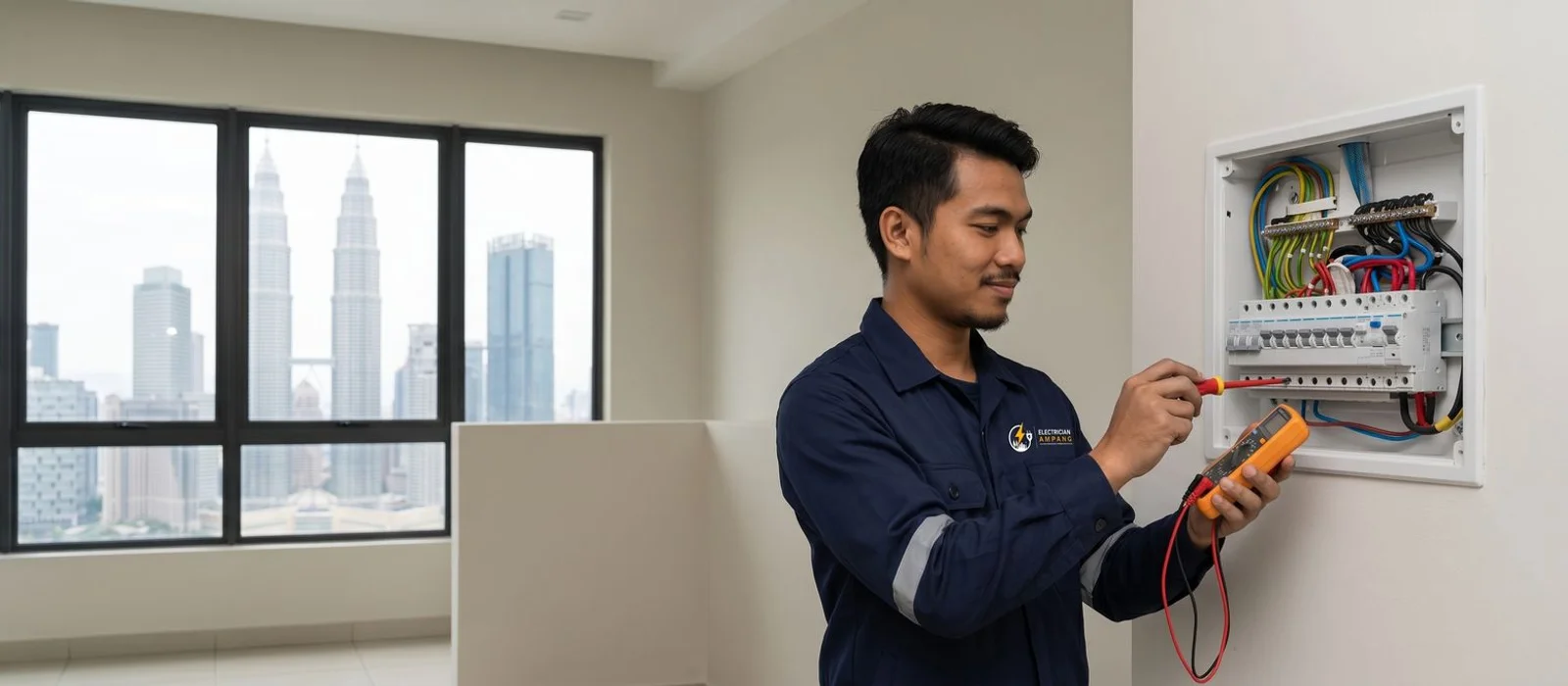
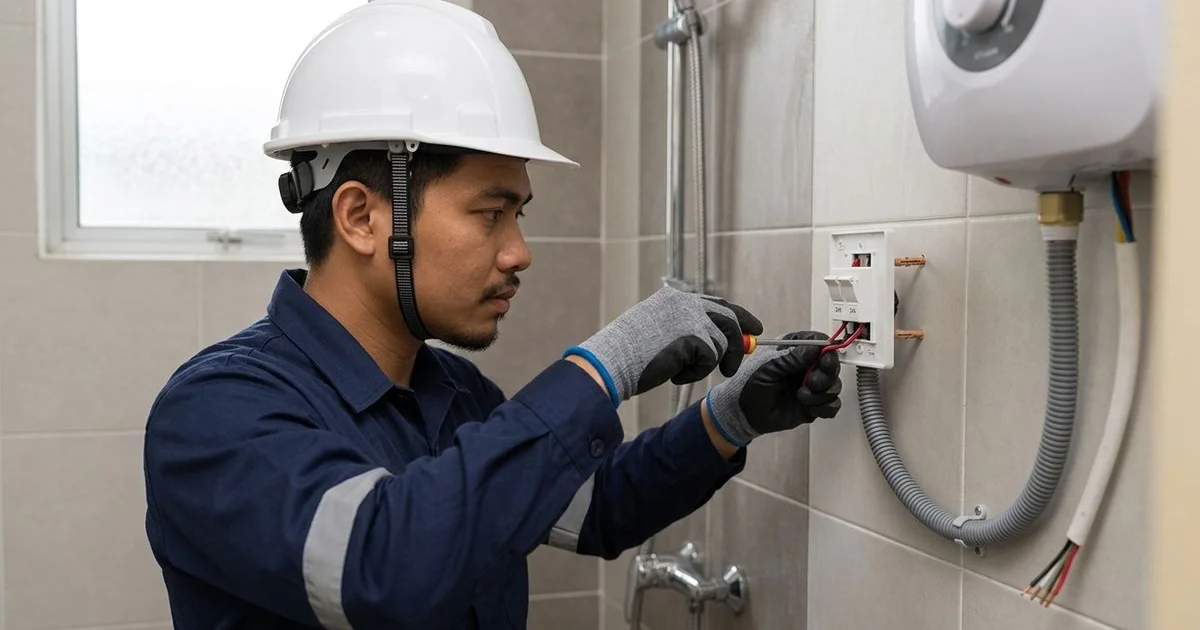
We know that a flickering bathroom light is a minor annoyance, but a tripping unit is an immediate water heater electrical safety warning.
That typical 3.6kW heating element acts as one of the heaviest electrical loads in a residential home. This heavy draw requires completely different wiring compared to a standard phone charger.
Our team at Electrician Ampang, operating since 2011, will break down the essential safety components like the 10mA RCD and the 20A isolation switch. Understanding these specific guidelines helps you protect your property and comply with the latest Energy Commission regulations.
You can read how this fits into our water heater installation service when you are ready to book.
Why a water heater needs a dedicated circuit
A water heater requires a dedicated circuit because it constantly draws 15 to 20 amps of current to produce hot water instantly. Sharing this massive load with other household appliances will immediately trip your main breaker or overheat the wiring.
Our technicians strictly follow the Suruhanjaya Tenaga (Energy Commission) guidelines for these installations. The rules mandate a completely independent line running directly from the Distribution Board (DB) to the unit.
Standard instant water heaters in Malaysia operate at 3.6kW, while premium rain shower models push up to 4.8kW. We always install a minimum 4mm² thick copper cable to handle this intense power demand safely.
Plugging a heater into a shared socket or an extension lead overloads the wiring fast. The cable insulation breaks down under the heat, creating a severe fire hazard inside your walls. Our water heater dedicated circuit installations completely remove that risk because the line serves the heater alone.
| Heater Power Rating | Approximate Amp Draw | Recommended Breaker | Required Minimum Cable |
|---|---|---|---|
| Up to 3.6kW | 15 Amps | 20A MCB | 4mm² Copper |
| 4.2kW - 4.8kW | 17 - 20 Amps | 32A MCB | 4mm² Copper |
The 20A double-pole switch
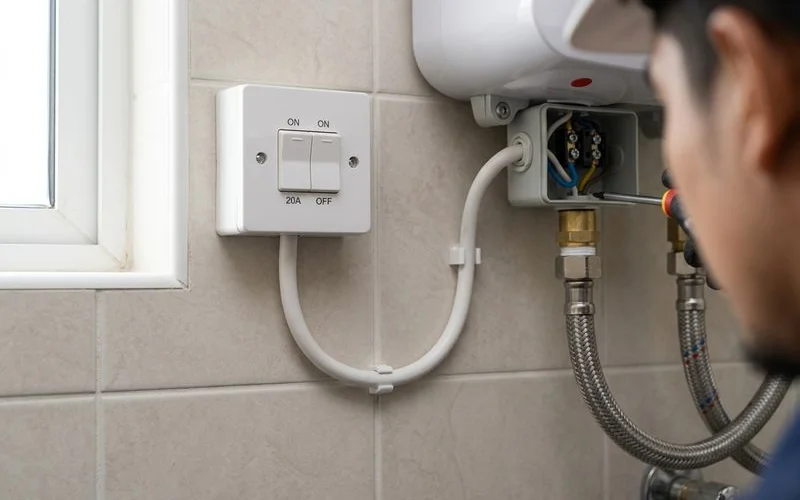
The 20A DP switch, often called a double-pole switch, is the mandatory isolation point that physically cuts power to your heater. This hardware guarantees no electrical current can reach the unit during maintenance or a sudden fault.
We never use standard single-pole room light switches for wet area appliances. A basic single-pole switch only disconnects the live wire, meaning a fault could still energize the neutral wire.
Double-pole models create a minimum 3mm physical gap in both the live and neutral wire paths simultaneously. Our standard choice is a reliable 20A unit from reputable brands like Schneider Electric, Clipsal, or UMS. These units include a built-in neon indicator light to confirm the power status at a single glance.
A DP switch is not optional
A water heater wired straight to a normal wall socket has no safe isolation point. The DP switch is the standard for a reason, and we never skip it.
Location matters just as much as the hardware itself. The switch must sit completely outside the designated wet zones. We install it within easy reach of the bathroom door, keeping it perfectly safe from splashing water.
RCD and ELCB shock protection
An RCD (Residual Current Device) protects you from fatal shocks by instantly cutting power if electricity leaks through water. The Malaysian law requires a highly sensitive 10mA RCD for any water heater installation.
We find that many older properties only feature a standard 100mA or 30mA RCD at the main board. That older sensitivity level works fine for living room sockets, but it reacts too slowly for a wet environment.
The 10mA device constantly monitors the exact amount of current flowing in and out of the heater. Our testing equipment verifies that these sensitive breakers trip in milliseconds if even 10 milliamps of current goes astray.
Suruhanjaya Tenaga 10mA Compliance
This rapid response stands as the only barrier between a minor tingling sensation and a lethal shock. Suruhanjaya Tenaga strictly enforces this 10mA threshold for all residential bathrooms.
We always audit your Distribution Board (DB) during a new fitting. If the protection falls short, the solution involves adding a dedicated 10mA external device for reliable water heater RCD protection right next to the heater.
Water heater electrical safety: The real risks of a poor install
A poorly installed water heater creates immediate fire hazards and life-threatening shock risks. Skipping the dedicated wiring or bypassing safety switches leaves your family completely unprotected during an electrical fault.
We frequently encounter dangerous DIY setups where heaters are illegally plugged into standard 13A wall sockets. Those standard plugs will eventually melt under the constant 15-amp load of a typical bathroom heater.
Improper electrical work also immediately voids the manufacturer warranty from top brands like Panasonic or Toshiba. Our inspection teams regularly document three severe consequences when handymen cut corners.
Common Installation Failures
- Melted Wiring: Shared circuits overheat the cables, which strips the insulation and starts wall fires.
- No Isolation: Missing a 20A DP switch means you cannot safely cut power during a bathroom flooding emergency.
- Shock Hazards: Lacking a 10mA RCD allows minor earth leaks to electrify the shower water.
These critical faults remain hidden behind the wall until a humid day pushes the compromised system to fail. That hidden danger makes licensed electricians essential for the entire setup process.
We invite you to see a correct fitting step by step in our guide on the installation process. A safe water heater relies entirely on the electrical work behind the wall.
Book an on-site check to ensure your water heater electrical safety is secure. Our electricians will make sure the circuit, the switch, and the protection are all done right.