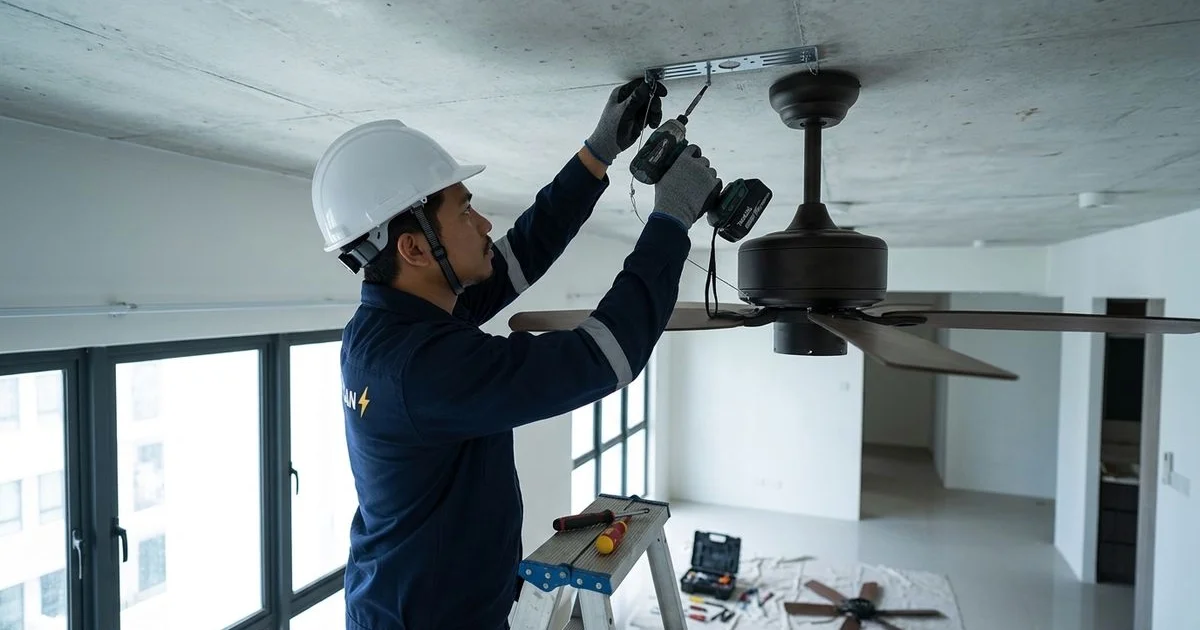
We see a lot of wobbly fans here at Electrician Ampang, and the problem almost always traces back to the ceiling fan mounting and support system.
A shaky fixture is a major warning sign.
Fixing this issue early prevents expensive damage and serious safety hazards. Our team has handled these setups since 2011.
This guide explains the mechanical forces at play and shows you the exact steps to secure your fan correctly.
Why a fan needs a load-bearing fixing
Our experience shows that a ceiling fan is not a static object. It spins for hours and creates a constant vibration that puts steady stress on the ceiling structure. That continuous movement is exactly why a fan needs a load-bearing ceiling fan bracket.
A standard lighting point is only built for a lightweight bulb that just hangs there. It cannot handle the dynamic pull of a heavy appliance.
The Panasonic Manufacturing Malaysia guidelines specifically warn about the jerking effect caused by loose fittings. A proper mount prevents this wear and tear.
Here are the main forces a proper bracket handles:
- Motor weight: AC motors often weigh over 6 kilograms.
- Rotational torque: The twisting force generated when the blades spin.
- Constant vibration: Minor imbalances that shake the fixture over time.
We always use hardware rated specifically for these dynamic loads. A heavy-duty bracket spreads the weight and grips into something solid. That is the difference between a quiet appliance and one that gradually loosens.
Concrete versus plasterboard ceilings
The ceiling material dictates the exact mounting method used. A concrete surface requires direct masonry anchors, while a ceiling fan on plasterboard ceiling needs attachment to the hidden structural framing.
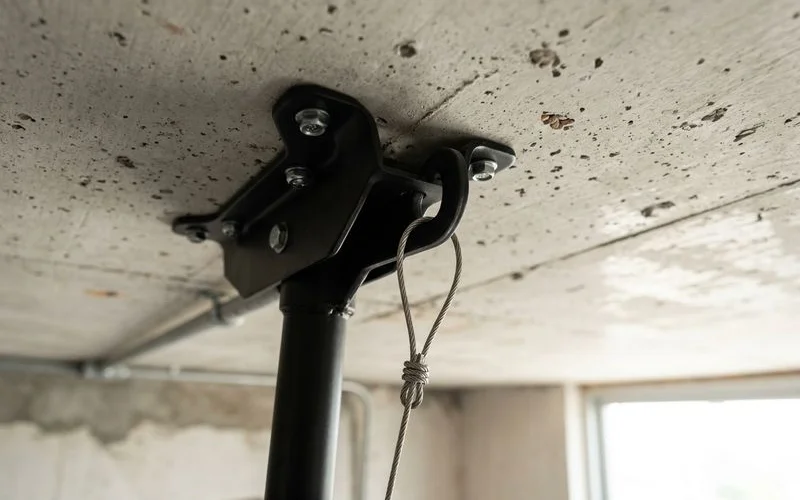
Our installers see concrete slabs in most Malaysian apartments. Concrete is highly stable and provides an excellent base for heavy fixtures. The bracket anchors directly into the concrete using heavy-duty expansion bolts, providing the strongest possible hold for a spinning motor.
| Feature | Concrete Ceiling | Plasterboard Ceiling |
|---|---|---|
| Material Strength | High density, very stable | Low density, brittle gypsum |
| Fixing Method | Direct masonry expansion bolts | Long screws into hidden structural joists |
A plasterboard ceiling requires a completely different approach. Plasterboard is essentially just compressed gypsum and fiber. It will easily crack under the weight of a running fan.
Contractors often use aluminium tracking like the Rondo KEY-LOCK system or wooden cross beams. An electrician locates this internal frame and drives the screws deep into the metal or timber.
The hidden structure matters
What you can see is only the surface. A safe fan fixing depends on what is behind the ceiling, and that is exactly what a professional checks first.
We never attach a fan directly to the gypsum board. A secure installation relies entirely on the framework hiding out of sight.
Safety wire and the right bracket
A secure installation pairs a heavy-duty bracket with a secondary ceiling fan safety wire. This combination ensures the appliance stays attached to the roof structure even if the primary mounting points fail.
Our local regulations take this dual-support system very seriously. A single point of failure is unacceptable for heavy, spinning machinery suspended above a living space.
The Role of the Load-Bearing Bracket
The primary bracket carries the full weight and absorbs the rotational torque. You need a bracket that matches the specific weight class of your fan model. A small plastic mount meant for a lightweight exhaust fan will shatter under the stress of a heavy 60-inch metal blade unit.
We strictly follow the manufacturer torque specifications during installation. Over-tightening the bolts crushes the internal rubber suspension rings. Those rubber rings are crucial for absorbing the natural vibrations of the motor.
The Essential Safety Wire Backup
A safety wire is a short steel cable linking the fan motor directly to the permanent ceiling hook. Suruhanjaya Tenaga enforces strict guidelines under the MS 1597 Part 2-80 standard. This rule mandates a secondary suspension system for all electric ceiling fans.
The safety wire must be made of anti-corrosive materials according to local JKR guidelines. If the main bracket fractures or the screws pull out, this steel rope catches the unit. It is a simple addition that prevents a catastrophic fall.
We always balance the fan blades after hanging the unit. Proper balancing reduces the shaking and extends the life of both the bracket and the safety cable.
The risks of an improper mount
An incorrect mounting setup often starts as a small wobble and ends in a complete structural failure. The constant friction wears down the electrical wiring and eventually rips the entire fixture from the ceiling.
Our service calls frequently involve fixtures that are visibly shaking or making loud grinding noises. These are clear indicators that the internal screws are working loose.
The physical danger of a falling appliance is very real. In March 2026, the Selama Magistrate’s Court in Perak awarded RM6,000 in damages to a student injured by a falling classroom fan. The magistrate ruled that the failure was reasonably foreseeable due to poor maintenance and faulty installation.
A heavy motor dropping from a height can cause severe trauma. Watch out for these early warning signs of a failing mount:
- Visible swaying on the lowest speed setting
- Clicking or grinding noises from the canopy
- A gap forming between the ceiling cover and the plaster
- Random power dropouts caused by strained wiring
Getting the mounting right is the heart of a safe job. Our ceiling fan installation service checks your ceiling type, fits the correct load-bearing bracket, and adds a safety wire.
Choosing the right appliance matters just as much. Our guide on what size ceiling fan you need covers the selection process in detail.
Your new fixture will be secure from day one. If you are unsure about your roof structure, an on-site check provides a clear answer before any work begins.