Since starting Electrician Ampang in 2011 as a small firm of dedicated professionals under New Era Air Cond & Electrical, the local market has seen every lighting trend imaginable. We constantly hear clients asking: is upgrading to led lighting worth it? The simple truth is that the switch is no longer optional.
Rising energy bills are a major concern for almost every household. Our daily lighting installation and repair work shows exactly how much money old bulbs waste.
With the July 2025 Tenaga Nasional Berhad (TNB) tariff hike pushing base rates to 45.62 sen per kWh, every wasted watt costs you more.
This guide will walk you through the actual savings, common dimmer problems, and the exact steps for a smooth conversion.
LED versus conventional lighting
Professional technicians replace outdated setups every day, and the performance gap is undeniable. If you are also dealing with old or failing fittings, the guide on replacing old light fixtures pairs well with an LED upgrade.
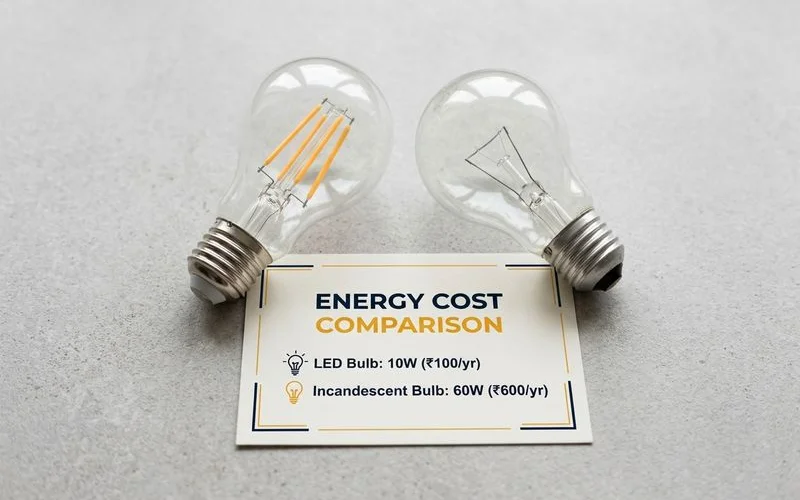
We typically install reputable brands like Philips or OSRAM that deliver bright light using just 9 watts. A standard incandescent bulb pulls about 60 watts to light the same room. This massive 85% reduction in power draw completely changes your energy consumption.
Our measurements show that older incandescent and fluorescent units burn off most of their electricity as wasted heat. This extra heat forces your air conditioning to work harder in our hot Malaysian climate. Modern LED vs conventional lighting puts almost all the energy directly into light output.
Here is how they compare:
| Feature | LED lighting | Conventional bulbs |
|---|---|---|
| Energy used for same brightness | Very low (e.g., 9W) | High (e.g., 60W) |
| Lifespan | Up to 25,000 hours | 1,000 to 2,000 hours |
| Heat given off | Minimal | Very High |
| Running cost | Low | Higher |
| Brightness control | Good with the right dimmer | Varies |
We strongly advise checking a few specific details before buying your replacements. You want to ensure the new products perform safely and effectively.
- Look for the SIRIM certification sticker to guarantee Malaysian safety compliance.
- Pick a 3000K warm white colour temperature for cosy living areas.
- Select a 6000K daylight bulb for clear visibility in kitchens and bathrooms.
- Choose a wide beam angle for even light distribution across a room.
For a typical Malaysian home with lights on every evening, the difference adds up quickly across the year.
Thinking about payback
We understand that the initial purchase price is the main hesitation for most homeowners. An LED bulb costs more upfront than an old incandescent, so it is fair to ask when that investment returns to your wallet.
Two main factors drive the LED lighting cost savings. Our financial breakdown shows that your monthly TNB bill drops slightly for every single bulb you swap. A quality LED also lasts up to 25,000 hours compared to a standard bulb’s 1,000 hours. You save money simply by eliminating constant replacement trips to MR DIY or the local hardware store.
We calculate that the July 2025 TNB tariff increase makes this payback happen even faster. Most households recover the upfront hardware cost within eight to twelve months.
The savings come from daily use
The more hours a light runs, the faster LED pays back. Start with the lights you use most, like the living room and kitchen.
Our experienced installers recommend a phased approach if a full house swap feels too expensive. Converting room by room spreads the cost while the savings start immediately. You can begin with high-traffic areas and update the guest rooms later.
Compatibility with fittings and dimmers
We always warn clients that LED is not always a simple drop-in swap. Most ordinary fittings take the new bulbs without any trouble, but LED dimmer compatibility is a notorious snag.
Many older properties use leading-edge dimmers designed specifically for power-hungry halogen bulbs. Our electricians find that pairing one of these old switches with a modern low-wattage LED causes severe flickering or a loud buzzing noise.
The technical reason is that old dimmers require a high minimum electrical load to function correctly. A quality trailing-edge dimmer is the professional fix. We check your dimmer switches as part of the job and calculate the exact load capacity needed to avoid problems:
- A standard 400W leading-edge switch might only handle 40W of total LED load safely.
- Exceeding this strict limit will cause your new lights to strobe rapidly.
- Pushing the components too hard can overheat and burn out the switch entirely.
- Upgrading to a dedicated trailing-edge unit eliminates these risks completely.
We often recommend replacing older fluorescent tube setups outright with an entirely new LED batten fitting rather than just changing the tube.
What an electrician handles
For a simple bulb-for-bulb swap, you can change LED bulbs yourself. Where an experienced professional adds value is managing the rest of the conversion safely. We replace older fittings, sort out dimmer compatibility, and check the wiring at each point while the fitting is off.
This inspection matters immensely in older properties where the wiring at a light point can be tired and dangerous. Malaysian heat takes a toll on household infrastructure over the decades. Our safety checks follow the latest Suruhanjaya Tenaga (Energy Commission) guidelines for residential properties.
The standard PVC insulation on electrical wiring becomes hard and brittle after about 25 years of use. Crumbling insulation is frequently discovered behind old light fixtures during routine upgrades. A professional assessment includes several critical safety steps:
- Testing the earth connection at the light switch.
- Inspecting the PVC wire sheathing for heat damage.
- Securing loose terminal blocks inside the ceiling cavity.
- Verifying the circuit breaker size matches the new load.
Leaving exposed copper wires inside a ceiling space creates a serious fire hazard, so upgrading to LED is one of the easiest ways to secure your property. Our electricians ensure every connection is completely tight before restoring the power. Book an on-site check with our lighting specialists and they will plan a conversion that fits your home and your budget.