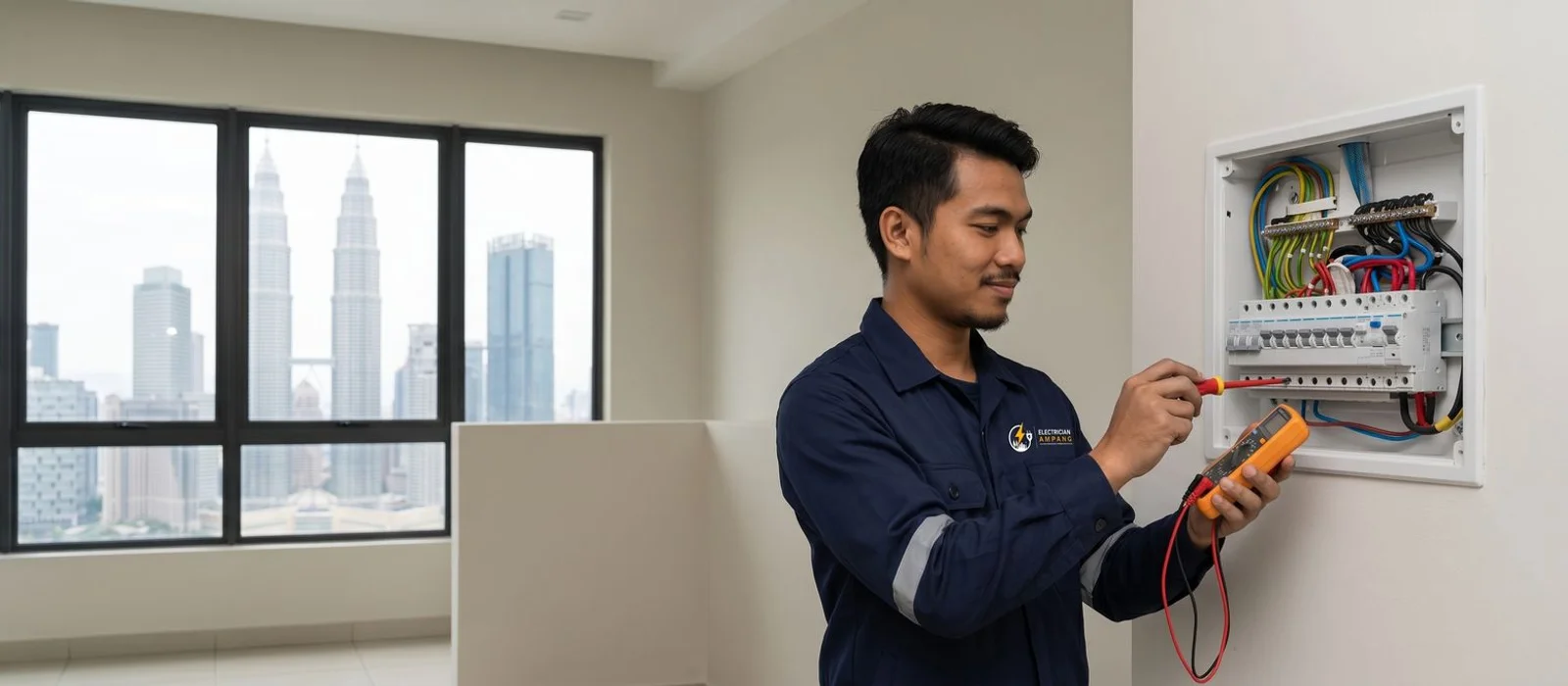
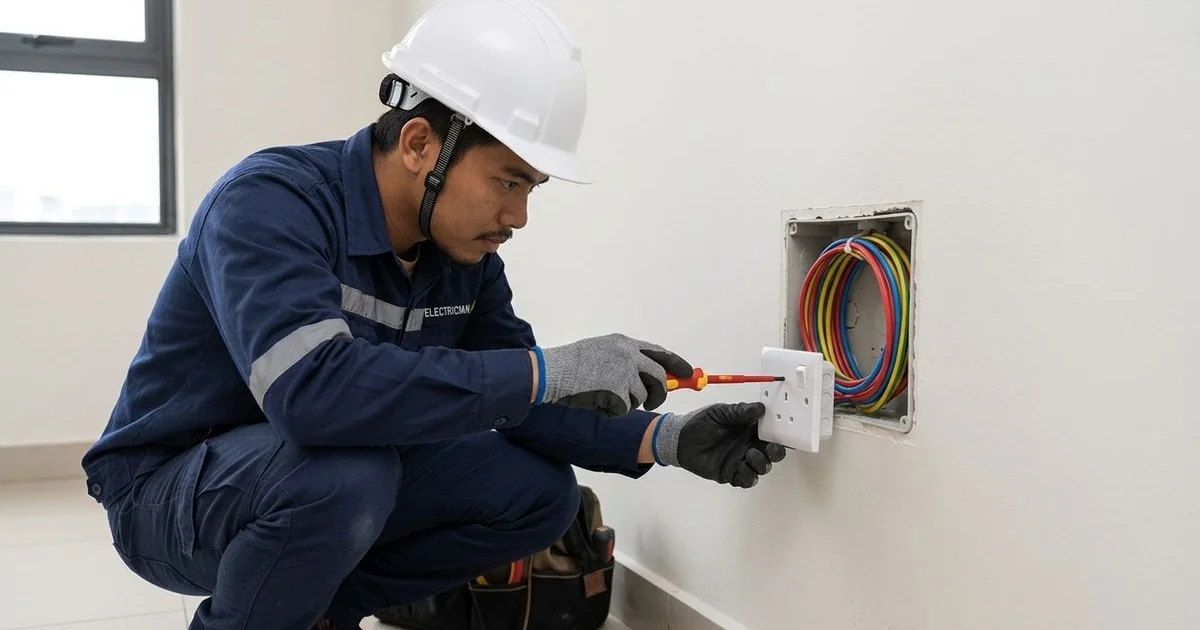
We frequently see homes built just a decade ago struggling to keep up with today’s electrical demands. Most properties simply lack the wall infrastructure to support our modern devices safely. You probably notice this when you are constantly unplugging one charger to plug in another.
Those daily frustrations are clear signs your room is operating past its intended capacity. Our electrical and lighting installation and repair service handles adding power points and socket extensions to fix exactly this problem. This small upgrade makes your living space significantly safer and far more practical.
Electrician Ampang started in 2011 as a small firm under New Era Air Cond & Electrical. We have seen how rapidly household technology outpaces original building plans.
This guide breaks down the safety data behind circuit limits to help you expand your capacity safely.
When you need extra power points and socket extensions
A new wall socket installation becomes necessary the moment you start relying on temporary extension leads for permanent appliances. This simple upgrade permanently resolves the tripping hazards and power limitations in your home.
We often inspect homes where multiple high-draw devices share a single outlet. Malaysian guidelines from the Energy Commission, Suruhanjaya Tenaga, advise that older domestic wiring was only designed for basic appliances. Modern bedrooms and kitchens now support smart TVs, air purifiers, and high-wattage cookers simultaneously.
Our technicians always recommend checking the age of your property’s electrical grid. Homes past the 15-year mark usually require a dedicated assessment to ensure the existing circuits can handle new additions. You will protect your expensive electronics by providing them with a stable, dedicated power source.
Watch out for these specific warning signs in your daily routine:
- Running cables underneath rugs or across doorways.
- Plugging multi-way adaptors directly into other adaptors.
- Experiencing frequent circuit breaker trips when running the kettle.
- Noticing warm or discoloured plastic around your existing wall plates.
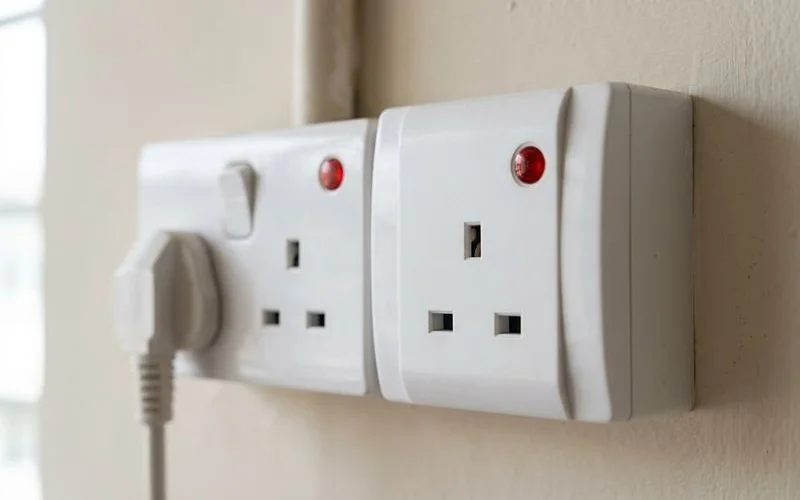
A new socket looks far neater than a tangle of adaptors, and it is much safer.
13A versus 15A sockets
Choosing a 13A vs 15A socket depends entirely on the total wattage of the appliance you intend to connect. A standard 13A socket safely handles up to 3000 watts, while a 15A version supports heavier dedicated loads up to 3600 watts.
We install the 13A standard three-pin socket for almost all general room layouts. This unit handles everyday household items like televisions, standing fans, and phone chargers without any issues. Most of your living room and bedroom electronics will use this standard rating safely.
Our installation process shifts to a 15A socket when you need to power a single, high-demand unit. This round-pin socket is mandatory for heavy continuous loads like water heaters or split-unit air conditioners. The larger pins provide a more secure connection that prevents long-term heat buildup.
Tell us what you plan to plug in
The right socket depends on the appliance. When you book, let us know if a heavy unit like an aircon is involved so we fit the correct rating from the start.
Choosing an undersized unit for a heavy appliance creates a serious overheating risk over time.
We recommend reviewing this quick comparison before making your decision:
| Socket Type | Maximum Safe Load | Common Household Uses | Circuit Requirement |
|---|---|---|---|
| 13A Socket | ~3,000 Watts | Televisions, laptops, standing fans, kettles | Shared ring or radial circuit |
| 15A Socket | ~3,600 Watts | Air conditioners, water heaters, heavy ovens | Dedicated 20A MCB circuit |
Why wiring beats adaptors
Properly wired sockets permanently distribute the electrical load across your home’s main distribution board, whereas adaptors simply force more current through a single, strained connection point. This structural difference is why direct wiring is the only permanent solution for extension lead safety.
We constantly see the dangerous results of overloading cheap multi-plug adaptors. The Malaysian Fire and Rescue Department (Bomba) reported in 2024 that 60% of structural fires were caused by electrical faults. Daisy-chaining power strips is a leading cause behind these alarming statistics.
Our safety protocol strongly warns against relying on unverified trailing sockets. Even if you purchase a SIRIM-approved extension lead with 100% pure copper cables, you are still restricted by the original wall plate’s 13A limit. Piling a refrigerator, microwave, and rice cooker onto one adaptor will quickly exceed that 3000-watt maximum.
You can read more about identifying these risks in our guide to common electrical hazards.
The limits of extension leads
Extension leads are meant for temporary use, not as a permanent household fixture. The wiring behind your wall is sized for a specific safe limit, and an adaptor does absolutely nothing to increase that overall capacity.
We always remind clients that overloading a circuit generates hidden heat inside the wall cavity. This heat slowly melts the protective insulation around the copper wires over months or years. A licensed electrician eliminates this overload risk by installing a completely new, correctly rated circuit.
Placement and circuit load
Placing a new socket requires mapping your daily habits against the existing electrical capacity of your distribution board. We calculate the current load on your breakers to ensure the new point delivers safe, reliable power exactly where you need it.
A thorough site inspection prevents you from simply shifting an overload problem to a different wall. Tapping a new connection into a ring circuit that is already near its maximum limit is a severe code violation. This is why a proper assessment matters just as much as the physical installation.
We check your Miniature Circuit Breakers (MCB) before making any modifications. If your kitchen circuit is heavily utilized, running a fresh dedicated wire from the main board is the safest approach. This ensures your new microwave or induction hob operates without tripping the main power supply.
Consider these factors when planning your room layout:
- Keep sockets at least 45cm above the floor to comply with standard safety practices.
- Position outlets well away from water sources in the kitchen and bathroom.
- Plan for future appliance purchases, not just your current electronic setup.
- Align the mounting height with your specific furniture, like home office desks or bedside tables.
Adding power points and socket extensions is a quick way to make a home safer and more practical. It pairs naturally with other lighting work, such as replacing dead or outdated light fixtures, while the electrician is already on site. We will handle the load calculations and component sourcing so you never have to worry about electrical faults. Book an on-site check and our team will plan the right sockets, the right ratings and the right circuits for your home.