
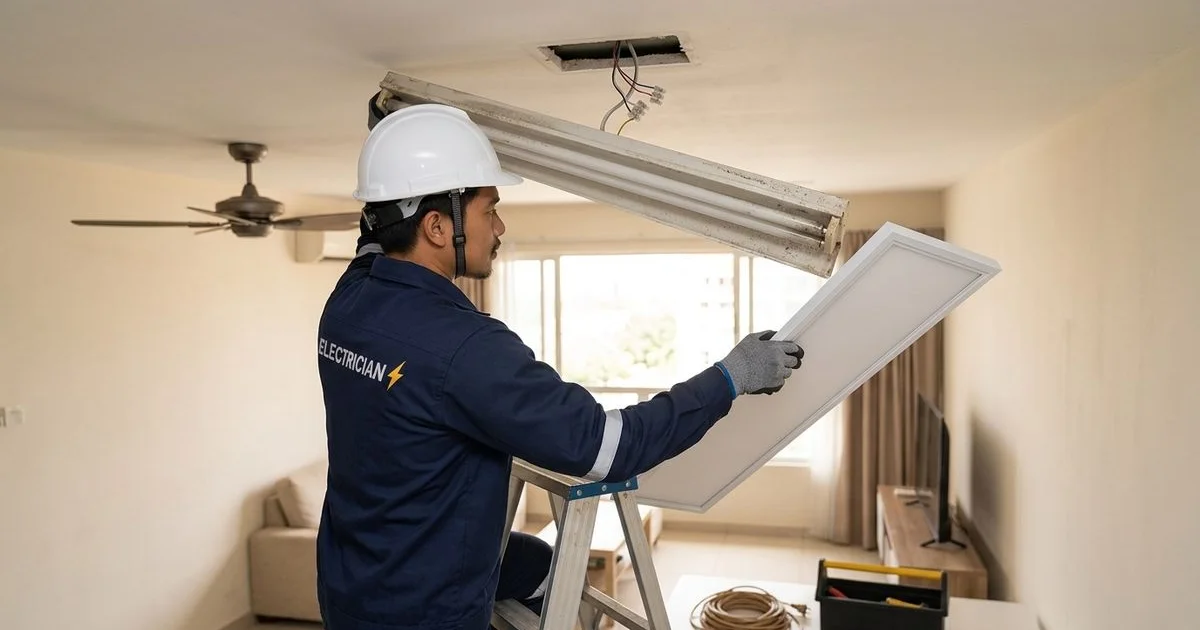
You know how frustrating a sudden dark room can be.
Since starting Electrician Ampang in 2011 as part of New Era Air Cond & Electrical, we have seen thousands of these cases across Malaysia.
Replacing old light fixtures might seem straightforward to most people. Many property owners assume a blown bulb is the only culprit.
We are going to break down how to spot the difference between a simple fix and a serious electrical fault, and exactly what to do next.
Fixture fault or wiring fault
When a light fixture not working interrupts your day, figuring out the cause is your first priority. A fitting failure and a wiring fault look identical from the ground, yet they require completely different solutions.
Start with the easiest check by trying a brand new E27 or B22 bulb. The fixture and wiring are completely fine if the new light turns on.
A fresh bulb does not always solve the problem. The cause then usually falls into one of three categories: the fitting itself has died, the wall switch is faulty, or there is a loose connection at the ceiling point. Tracing the exact fault requires a licensed professional, and this troubleshooting process is a regular part of our lighting installation and repair service.
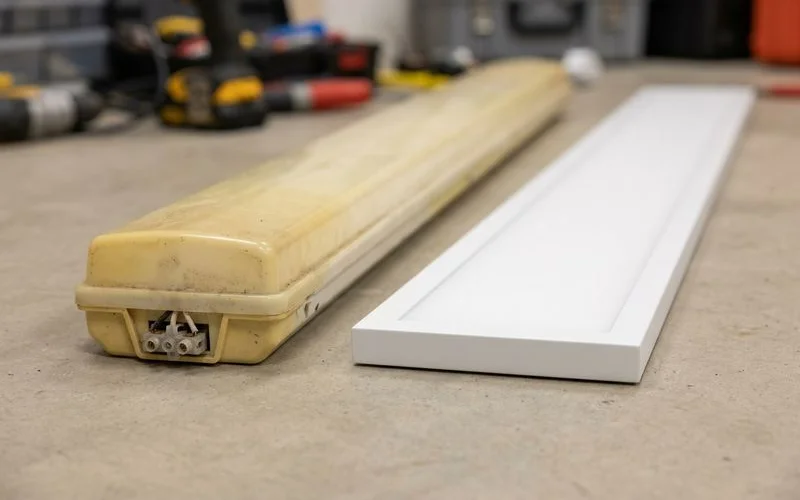
An outdated fitting is often worth throwing out even if it technically still functions. Old T8 fluorescent tube lights are notorious for flickering and buzzing due to failing magnetic ballasts. Modern fixtures provide better illumination, look much tidier, and drastically cut your electricity bills.
Look for these specific warning signs to narrow down the issue:
- Visible black marks: Scorching around the bulb holder suggests a blown fitting.
- Buzzing sounds: This usually points to a failing driver in LED panels or ballasts in old tubes.
- Inconsistent flickering: This often indicates a loose wire at the ceiling point or the switch.
- Tripping breakers: A tripped 6A Miniature Circuit Breaker (MCB) in your DB box points to a hard wiring fault.
Safe removal when replacing old light fixtures
Changing a light fitting requires much more than simply unscrewing the old base. Live voltage sits right at the ceiling point, making proper isolation absolutely mandatory before any work begins.
We always switch off the dedicated lighting circuit at the Distribution Board (DB box) first. Trusting the wall switch alone is a dangerous mistake. The old fitting comes down after we verify the point is dead using a reliable non-contact voltage tester.
A bulb swap is not a fitting swap
Changing a bulb is safe for anyone. Handling a full light fitting replacement means working directly on live circuit wiring, which is restricted to qualified electricians for a very good reason.
Connections receive a thorough check next to ensure the earth cable is securely bonded. We wire the new fitting in cleanly and attach it flush against the ceiling.
A proper installation takes very little time and leaves zero loose wires behind. This eliminates the risk of future electrical arcing or fire hazards.
Matching new fittings to existing wiring
Most brand new light fixtures connect easily to the cables waiting at your ceiling point, but the real trouble starts when that existing cable is decades old. Many older Malaysian properties still use wiring that has become discoloured, brittle, or badly terminated due to years of tropical heat exposure.
Bolting a shiny new ceiling fan or LED panel onto tired cables just masks a dangerous weak spot. We thoroughly inspect the insulation at the point while the fitting is removed, trimming and repairing any damaged sections immediately.
The next step involves verifying that your chosen fitting matches the circuit capacity and meets local safety standards. All new installations should carry a valid SIRIM-ST certification label for compliance.
If you are finally ditching those ancient fluorescent tubes, our detailed guide on whether upgrading to LED is worth it explains exactly what benefits to expect.
Identifying Outdated Cable Standards
Understanding your ceiling wiring helps identify how old your circuit might be.
| Wiring Era | Live Wire Colour | Neutral Wire Colour | Earth Wire Colour |
|---|---|---|---|
| Pre-2004 (Old Standard) | Red or Yellow | Black | Green |
| Post-2004 (Current Standard) | Brown | Blue | Green and Yellow |
When the switch or circuit needs work
Sometimes the ceiling unit is perfectly fine and the real breakdown hides somewhere else. A worn-out faulty light switch can easily prevent a bulb from turning on or cause severe flickering. Loose connections within the wider lighting circuit create the exact same symptoms.
These mechanical switches usually give warning signs before they completely fail. The contacts inside degrade after roughly ten years of daily use in most homes.
Watch out for these clear indicators of switch failure:
- Physical looseness: The plastic toggle feels floppy or lacks a crisp click.
- Sticking mechanism: You have to press unusually hard to turn the light on.
- Visible sparks: A tiny flash behind the faceplate means electrical arcing is happening.
- Cracked casings: Broken plastic exposes you to live internal components.
Multiple lights acting up on the same circuit point to a larger issue at the main panel. The fault rests in the main cable run rather than a single isolated fitting.
We always assess the entire electrical picture instead of just staring at one dead bulb. Tracing the actual root cause during an on-site inspection ensures nothing gets missed.
Fixing the switch safely is just the first step in restoring your power. Taking action on replacing old light fixtures and securing your wiring prevents bigger headaches down the road, so reach out to our team to book a complete safety check today.