We understand that dealing with ageing electrical systems is a frequent challenge for Malaysian property owners, leading many to ask: is old wiring a fire hazard?
Old cables are not dangerous simply because of their age. The real issue is how materials degrade over decades of constant use. The Fire and Rescue Department of Malaysia (Bomba) states that roughly 60% of domestic fires stem from electrical issues, which often trace back to outdated or overloaded circuits.
Our team at Electrician Ampang has handled these exact scenarios since we first opened our doors in 2011. Let’s look at the data behind these risks, examine the specific warning signs, and outline a practical way to manage your property’s safety.
How Old Wiring Becomes Risky
People often wonder, is old wiring a fire hazard? The direct answer is yes, especially when its protective plastic insulation dries out, cracks, and exposes live metal conductors. This exposed metal can easily touch other surfaces and cause an immediate short circuit.
Every electrical cable features an insulation layer, which is the plastic or fabric coating that keeps the live current safely contained. Insulation stops two live lines from touching and prevents you from receiving a shock. Heat, humidity, and constant current flow slowly break this material down. Discussing old cable insulation safety is important because older PVC materials, commonly used in Malaysian homes built before the year 2000, have a realistic lifespan of about 25 to 30 years.
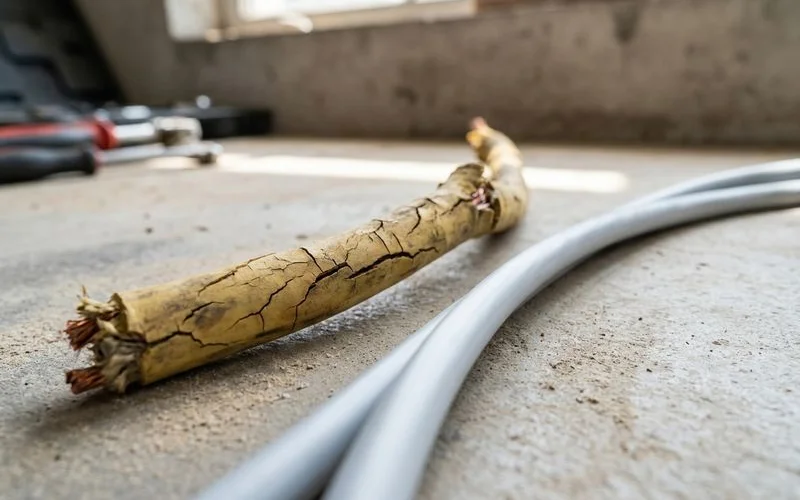
Once that PVC layer becomes brittle, it begins to crumble away inside your walls. Bare wires touching will trigger a short circuit, throwing a spark and generating intense heat in a split second. If that flash reaches dry wood or accumulated wall dust, a structural fire can start.
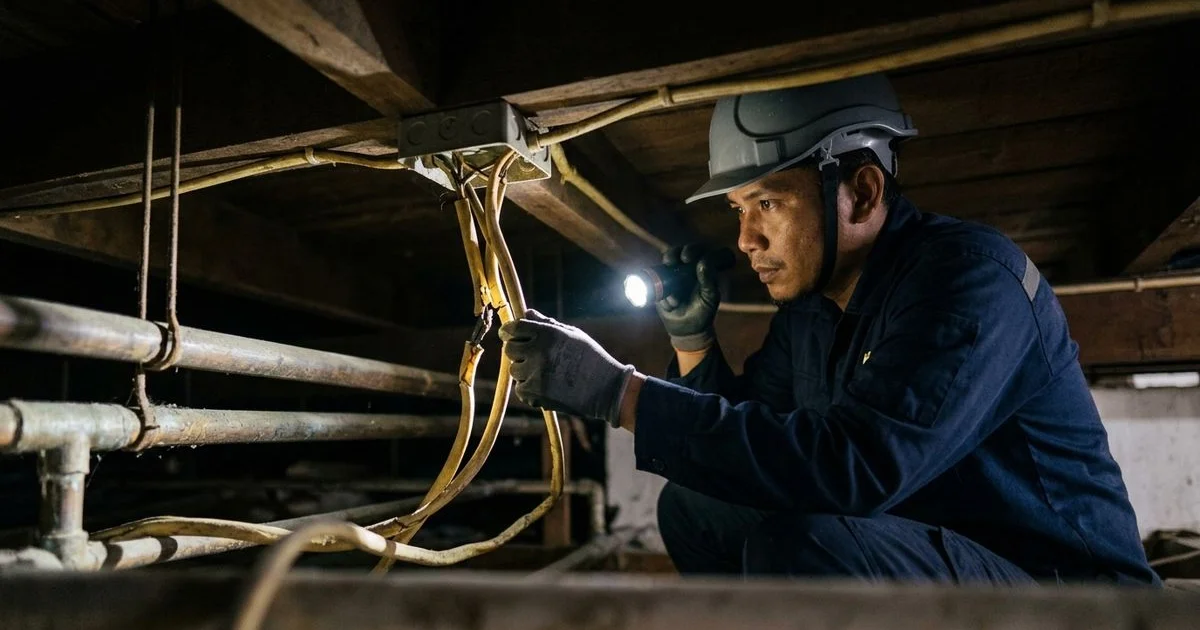
We highly recommend updating these degraded circuits before a serious failure occurs. A faulty cable rarely catches fire without prior warning signs. An early inspection usually catches the problem, and booking a professional rewiring service replaces tired cables well before they spark. If you are assessing your property, be aware that common factors that accelerate insulation breakdown include:
- High Ambient Heat: Malaysia’s tropical climate speeds up the degradation of older plastics.
- Pest Damage: Rodents often chew through brittle wire casings in roof spaces.
- Constant Overloading: Pushing too much current through a line generates internal heat that cooks the plastic from the inside.
Aluminium Versus Copper Wiring
Understanding aluminium wiring risks is crucial because this metal expands significantly more when heated, which loosens connection points over time. These loose connections create tiny gaps where electricity can spark and generate dangerous levels of heat.
Not all historical properties use copper. Some older homes were fitted with aluminium cables, and this metal behaves very differently under load.
The main issues with older aluminium installations include:
- Higher Thermal Expansion: Aluminium expands and contracts at a much higher rate than copper as it heats up and cools down.
- Loose Connections: This constant movement slowly loosens the screws and clamps at your sockets and distribution board.
- Rapid Oxidation: Aluminium is a softer metal that corrodes quickly, increasing resistance and generating even more heat at contact points.
This does not mean you must rip out aluminium wiring immediately. It simply means the system requires proper checking and maintenance by a certified technician who understands these specific metal properties.
We suggest reviewing the differences to understand why modern Malaysian Standards (MS IEC 60364) mandate copper for residential circuits. Copper offers superior safety margins for daily household use.
| Feature | Copper Wiring (Modern Standard) | Aluminium Wiring (Older Homes) |
|---|---|---|
| Thermal Expansion | Low expansion under heat | High expansion, leading to loose joints |
| Oxidation Risk | Minimal, maintains good contact | High, corrosion increases fire risk |
| Flexibility | High, bends easily without breaking | Low, brittle and prone to snapping |
| Regulatory Status | Required for new residential builds | Requires close monitoring if existing |
Overheating, Loose Joints and Arc Faults
Recognising overheating wiring signs early is vital. Most electrical fires happen because a loose joint causes continuous sparking or because a circuit is carrying more electrical current than it can safely handle. Both scenarios generate extreme heat that eventually melts insulation and ignites surrounding materials.
A loose connection creates what electricians call an arc fault. This is a small, repeated spark that jumps across a gap in the joint.
Each spark is tiny, but together they produce a massive amount of heat in one concentrated spot. Over time, that spot scorches, melts the plastic housing, and can easily catch fire.
Heat is the warning sign
A socket or switch should never feel warm to the touch. If it does, something is wrong inside. Switch off that circuit and have it checked before using it again.
Overloading is the second major culprit behind panel fires. If too many heavy appliances run on a single old circuit, the cable heats up beyond its safe thermal limit.
Our technicians frequently see old 1.5mm or 2.5mm cables struggling to support modern appliances. Today, high-demand items like a 7kW EV charger or a high-pressure water heater require at least a 6mm² copper cable to comply with Suruhanjaya Tenaga guidelines. Older wiring is frequently undersized for these massive modern loads, making dangerous overheating much more likely.
What an Electrician Inspects and How Urgent It Is
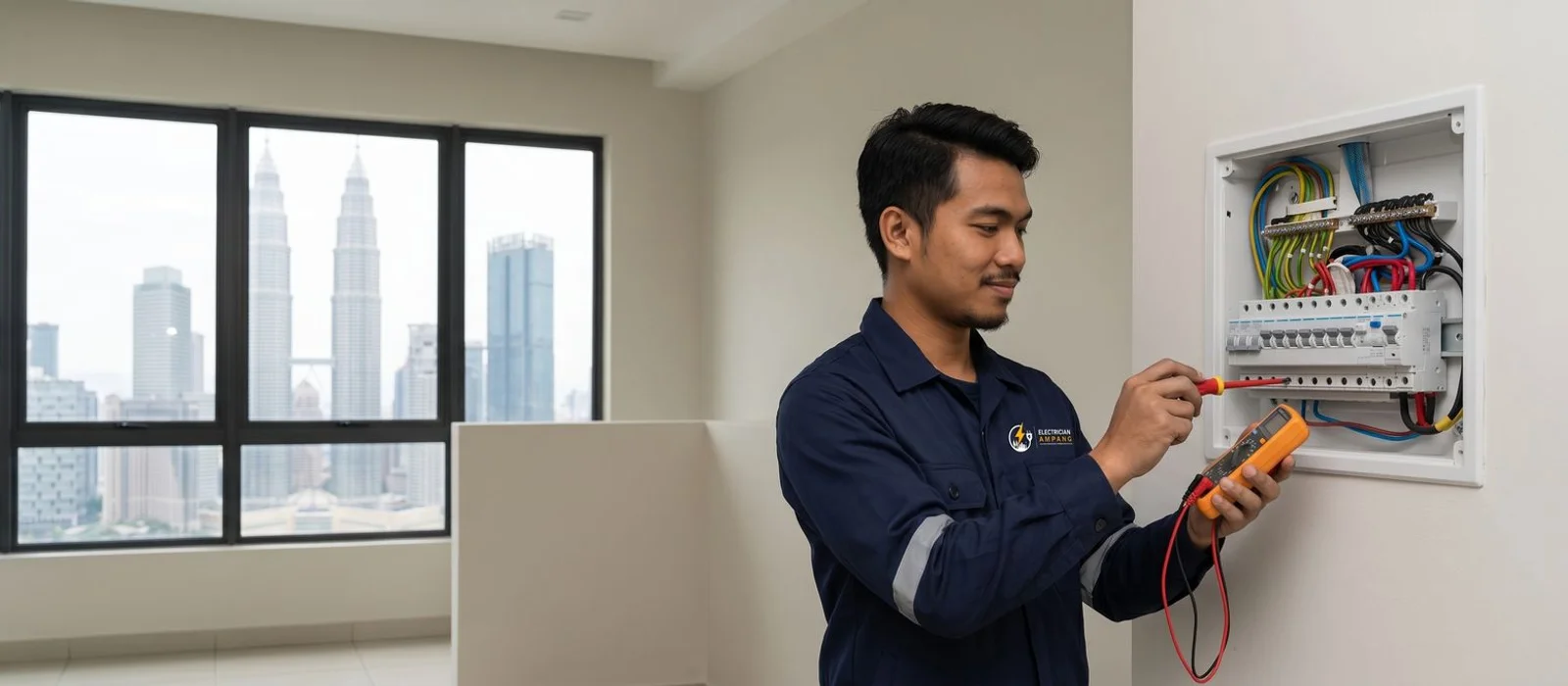
An electrician inspects the physical condition of your cables, tests the insulation resistance, and verifies that your earth protection systems function correctly. If you smell burning plastic or see scorch marks, the situation is extremely urgent and requires immediate professional attention.
A proper wiring inspection is the safest way to know exactly where your property stands. A certified professional will check the cable type, test the insulation integrity with specialised meters, look for scorched connections, and confirm the circuit breakers trip correctly. During this process, the core checks include:
- Insulation Resistance: Testing the plastic casing for degradation.
- Connection Integrity: Checking the main distribution board for scorched or loose joints.
- Earth Loop Impedance: Ensuring shock protection systems are fully active.
The Energy Commission (Suruhanjaya Tenaga) officially recommends that residential properties undergo a complete electrical inspection every 10 years.
We advise homeowners not to panic if their house is simply old and has never been tested. It is not an automatic emergency, but scheduling a planned inspection is a very wise move. You can review the full checklist of symptoms in our guide on the signs your house needs rewiring.
Planning Your Next Steps
An honest inspection tells you whether your setup is safe, requires a minor repair, or is due for a full house rewire. Knowing the factual condition of your cables lets you protect your family and budget for the work calmly.
If a replacement is necessary, planning ahead helps manage the costs. In Malaysia, a full house rewiring project typically costs between RM4,000 and RM15,000 in 2026, depending on the property size and the number of power points required.
Getting ahead of the problem prevents a sudden fault from forcing a rushed and expensive emergency decision. Always ensure your chosen contractor is properly registered. You can easily verify an electrician’s credentials through the Suruhanjaya Tenaga e-Licensing system before allowing them to start any work.
Final Thoughts on Electrical Safety
Ignoring ageing cables can lead to devastating consequences, and if you are still wondering is old wiring a fire hazard, the data clearly shows it is a major risk factor. Testing your cables ensures your daily appliances run safely without risking a sudden emergency.
We encourage you to walk through your property today and feel your heavy-use sockets for any unusual heat.
If you spot any warning signs or simply want peace of mind, reach out to a licensed professional to schedule your 10-year inspection.