Electrician Ampang started back in 2011 as a small firm under New Era Air Cond & Electrical, and from what we have seen since then, the need for rewiring old terrace houses is a massive hidden factor in most property purchases. Buyers often secure a solid brick structure, but the cables inside are silently failing.
We will break down exactly why these older circuits pose a risk.
The following guide outlines practical ways to upgrade your power supply safely.
Wiring Issues Common in Older Klang Valley Terraces
We find that age is the primary culprit behind most electrical faults in these properties. Suruhanjaya Tenaga (the Energy Commission) notes that PVC-insulated cables typically degrade after 25 to 30 years in Malaysia’s humid climate.
The insulation turns dry and brittle, which easily leads to dangerous short circuits. Our rewiring service replaces these hazardous cables with fresh, compliant materials.
These older homes were wired for a very different era, usually only meant to handle a ceiling fan, a few lights, and a standard fridge. Now, a modern family demands power for multiple air conditioning units, water heaters, and heavy kitchen appliances.
Before you start any cosmetic upgrades, watch out for these common electrical warning signs:
- Frequent Tripping: Main switches that cut off when multiple appliances run.
- Flickering Lights: A strong indicator of loose connections or voltage drops.
- Hot Sockets: Switch plates that feel warm to the touch after extended use.
- Burnt Smells: The distinct odor of melting plastic near the DB box.
We also frequently encounter dangerous patchwork modifications in subsale terraces. Past owners likely added sockets piecemeal without upgrading the main distribution board.
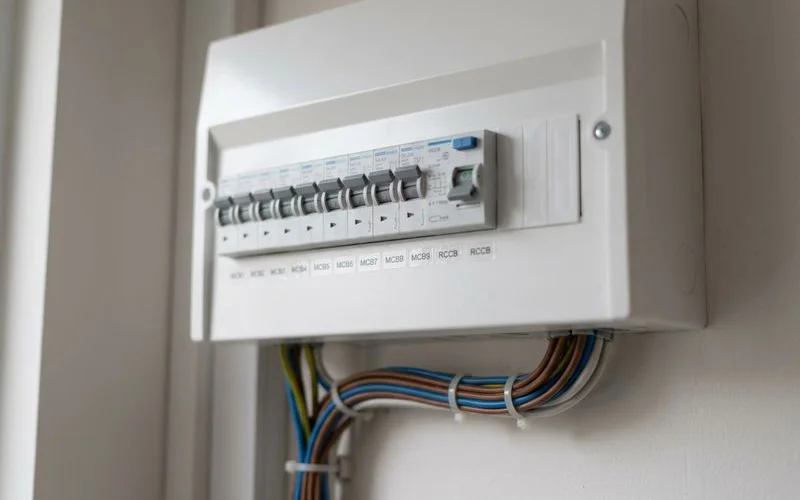
Many of these original plastic DB boxes lack a modern Residual Current Device (RCD). Without an RCD rated at 30mA for general sockets, the system offers zero protection against fatal electric shocks.
Safety Standard Warning
Suruhanjaya Tenaga regulations state that residential wiring must be protected by an RCD. Old plastic DB boxes without this 30mA protection leave residents vulnerable to severe injuries.
Concealed Conduit Versus Surface Trunking
We always ask clients how they want the new cables routed during an upgrade. There are two main methods, and your choice dictates the project’s cost and mess.
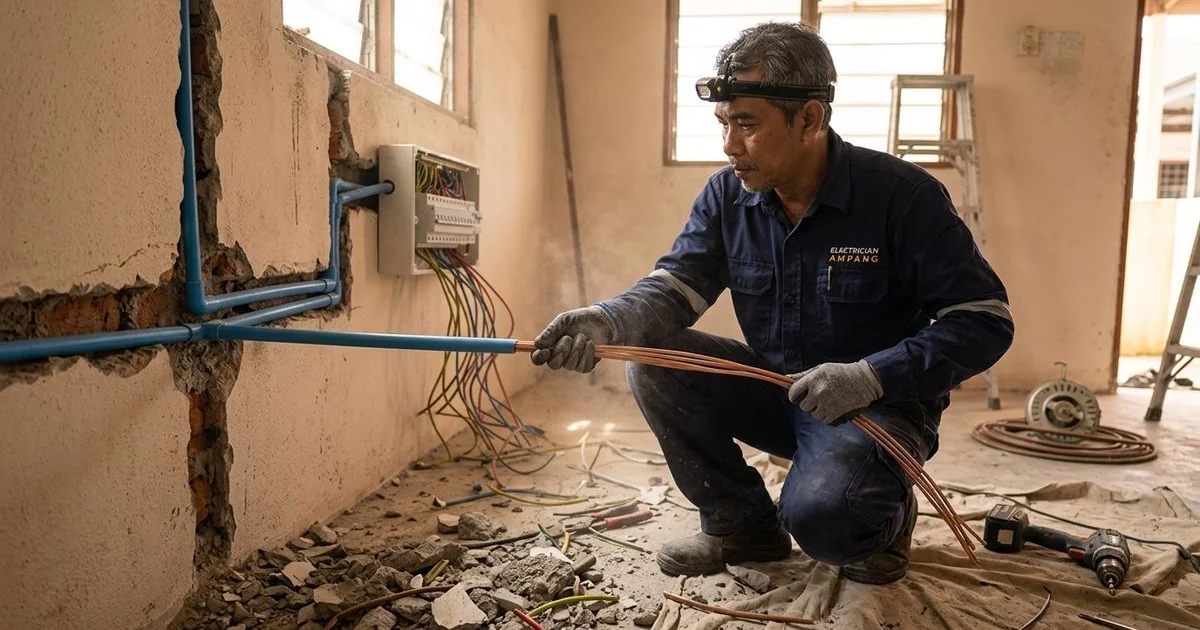
Concealed conduit means the electrician runs cables inside PVC pipes hidden deep within your walls. This method requires wet works, meaning the crew must hack channels into the brick and plaster over them later.
The final finish looks perfectly clean, but you can expect to pay upwards of RM150 per point due to the heavy labour.
| Feature | Concealed Conduit | Surface Trunking |
|---|---|---|
| Visual Appearance | Hidden entirely | Visible plastic casing |
| Installation Mess | High (requires wall hacking) | Minimal (no hacking) |
| Average Cost Impact | Higher (RM150+ per point) | Lower (RM90 - RM120 per point) |
| Best Suited For | Major renovations | Quick, budget upgrades |
Surface trunking involves running the wiring inside slim plastic casings fixed directly onto the wall surface. Our technicians can finish this job much faster with zero hacking required.
A standard surface lighting point usually costs between RM90 and RM120. The trade-off is purely visual, as the plastic channels remain visible.
Match the method to the moment
If you are renovating, concealed conduit is the natural choice while walls are open. If you just need a safe rewire without major works, surface trunking gets you there with far less mess.
Coordinating Rewiring With a Renovation
Timing your electrical upgrades alongside a broader project makes rewiring during renovation a highly strategic move. Walls are naturally stripped and floors are lifted during these major projects.
We highly recommend pulling your new 2.5mm² copper cables right after the contractor finishes the structural wall hacking. Doing this before the new plaster ceiling and expensive floor tiles go in saves you from paying for repairs twice.
You also gain the freedom to optimize your layout. Homeowners can strategically place power sockets to suit a new TV console or a modern kitchen island, rather than accepting the original 1990s layout. Our guide on how long rewiring takes helps you slot this critical work directly into your contractor’s schedule.
Here is the ideal sequence for coordinating with your main contractor:
- Demolition Phase: Old fixtures and unnecessary walls are removed.
- Wall Hacking: Channels are cut for new concealed conduits.
- Cable Pulling: Electricians run the new wiring through the open walls.
- Plastering & Finishes: Walls are sealed, and the final aesthetic touches begin.
Adding Circuits for Modern Loads
Modern daily life places massive demands on an electrical system built decades ago. Upgrading your panel is the perfect time to give heavy appliances the dedicated power they need.
We structure these upgrades by dividing the house into specialized zones. Sharing a single circuit between two heavy draw appliances is a massive fire risk and violates local safety codes.
Overloaded cables generate extreme heat, which melts insulation and causes frequent tripping.
Air Conditioning Units
Every new air conditioner needs its own dedicated supply to run safely. Adding circuits for aircon is essential because a standard 1.5HP to 2HP compressor draws significant starting current.
We pull a fresh 2.5mm² copper wire directly from the DB box to a dedicated 20A Miniature Circuit Breaker (MCB) for each unit.
Water Heaters and Wet Areas
Bathrooms require the strictest safety measures in the entire house. Suruhanjaya Tenaga strictly mandates that every water heater must have a dedicated 20A double pole switch.
More importantly, this circuit must be protected by a highly sensitive 10mA RCD to prevent electrocution in wet conditions. Our installers always verify this sensitivity rating before signing off on a bathroom circuit.
This simple check saves lives.
Kitchen Appliances
Your kitchen is essentially a high-draw industrial zone. Built-in ovens, induction cookers, and large refrigerators should never share a standard ring circuit.
We install dedicated 15A or 20A sockets for these specific appliances to ensure continuous, safe operation. This separation prevents a faulty toaster from tripping the power to your refrigerator.
Conclusion
We know that updating an old property feels like a massive undertaking.
Tackling the electrical system first gives you absolute peace of mind before you spend money on paint or tiles. Your decades-old terrace can easily handle the demands of modern living with the right infrastructure in place.
Contact our team today to schedule a thorough inspection of your current DB box and wiring layout.