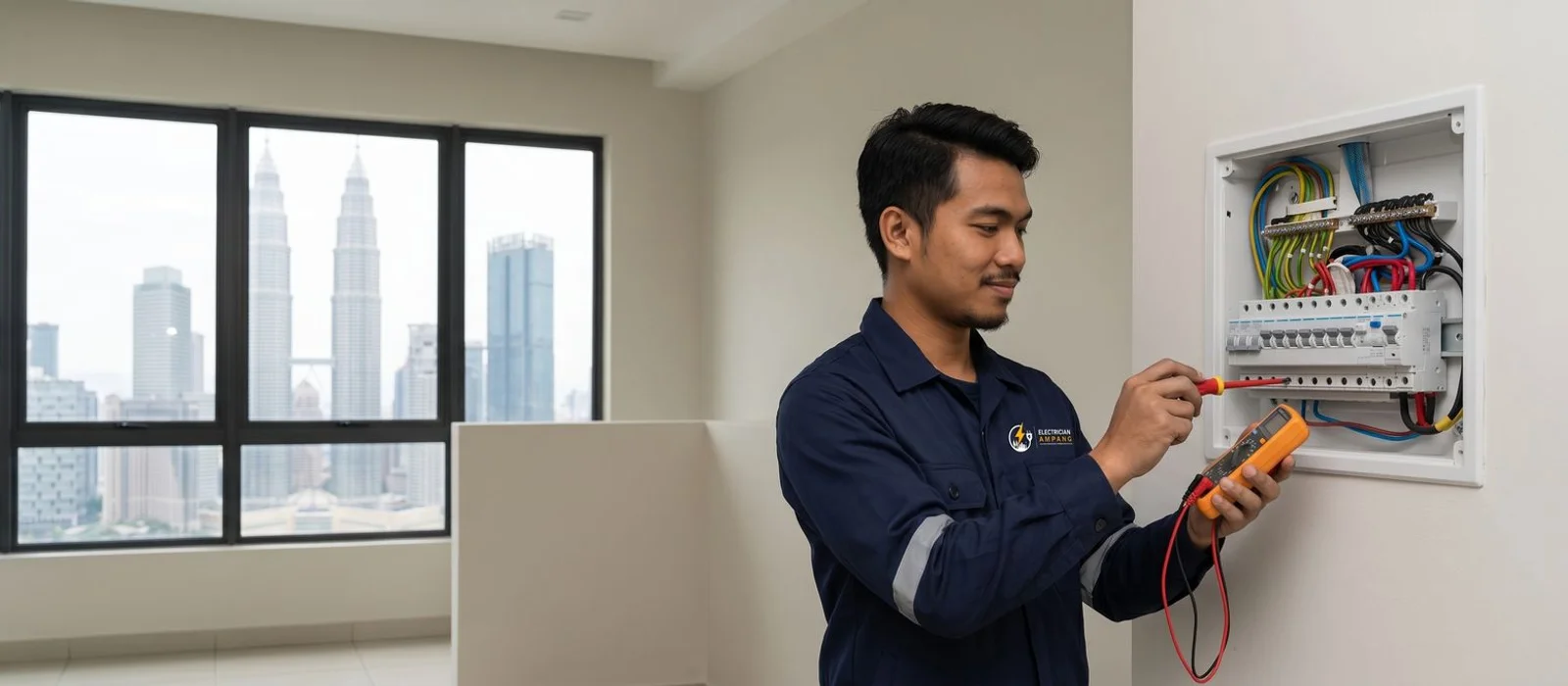
We started Electrician Ampang back in 2011 as a small firm under New Era Air Cond & Electrical, and quickly noticed how often people miss the signs your house needs rewiring. Many homeowners invest heavily in kitchen cabinets or premium flooring, completely ignoring the electrical distribution board. The wiring is hidden behind the plaster, so it remains out of sight and out of mind until the power trips during a dinner party.
Our experience shows that ignoring those early warning signs is a costly mistake. The Malaysian Fire and Rescue Department reported in 2025 that faulty wiring and overloaded sockets cause roughly 60 percent of building fires. That specific statistic is exactly why paying attention to your cables is about protecting your property, not just keeping the lights on.
We are going to break down the exact warning signs to watch for and outline the practical steps to take if your system is outdated.
The Warning Signs Your House Needs Rewiring
Your house wiring works quietly in the background, so it is easy to forget about. But wiring does not last forever. Over the years, it gets worn down by heat, constant electrical loads, and simple aging.
If you spot certain signs, your home might be telling you it needs a serious upgrade. A trip now and then is normal, but if your DB box (the panel controlling power to your home) trips repeatedly, the circuits are definitely struggling.
Our team often sees homeowners confusing a standard Miniature Circuit Breaker (MCB) trip with a Residual Current Device (RCD) trip. A tripping RCD in your Hager or Schneider board usually points to a dangerous earth leakage, which requires immediate attention.
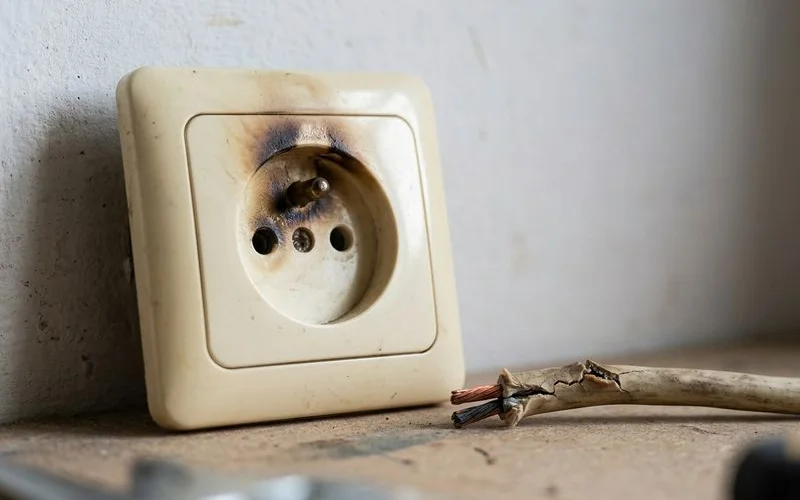
Here are a few other critical indicators that demand immediate action:
- Flickering lights: Often caused by loose connections in the circuit, which create a silent fire risk.
- Buzzing sockets: A loud hum is a clear sign of arcing electricity behind the plastic cover.
- Warm switch plates: Sockets should never feel hot to the touch after unplugging an appliance.
- Sparking outlets: Small pops or sparks when plugging in a device indicate failing internal contacts.
Older homes may also have two-pin sockets with no earth pin. The earth is a safety path that carries fault current away from you, so a missing earth is a real concern. Our wiring and rewiring service starts every job with a proper check of these exact signs.
Old Cable Types Are a Red Flag
The age and type of cable in your walls matters a lot. Some older wiring was simply never built to handle the heavy electrical loads run today.
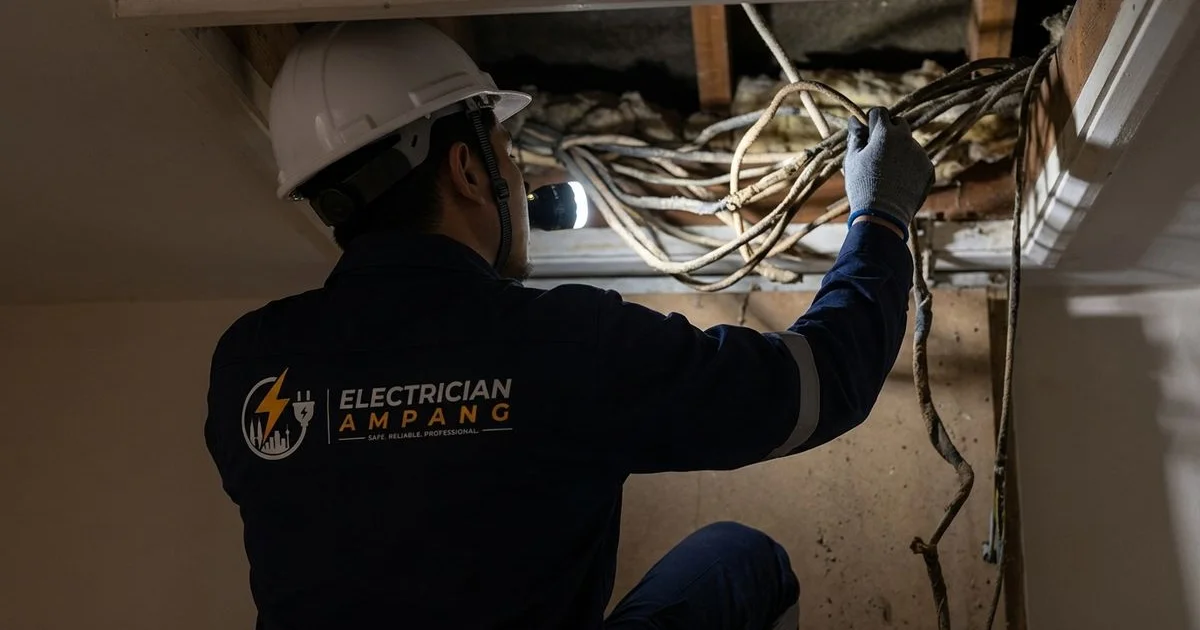
Fabric-covered and rubber-insulated cables were standard in much older homes. Over decades, that insulation dries out, cracks, and crumbles.
We see this degradation constantly in historic properties. Once the insulation fails, bare wires can touch and cause a dangerous short circuit. Aluminium wiring is another major concern because it expands and contracts more than copper in Malaysia’s tropical heat.
Old cable is not always visible
Wiring runs hidden inside walls and ceilings. Your house can look perfectly normal while the cable behind the plaster is brittle and unsafe. That is why a hands-on inspection matters more than how the house looks.
Suruhanjaya Tenaga (the Energy Commission) requires all electrical works to follow strict MS IEC 60364 wiring standards. Old rubber and aluminium setups simply do not meet these modern safety limits.
Comparing Cable Materials
| Cable Material | Common Era | Primary Safety Risk |
|---|---|---|
| Rubber Insulation | Pre-1980s | Dries, cracks, and exposes bare live wires to moisture. |
| Aluminium Core | 1970s | Expands with heat, causing loose terminal connections. |
| Modern PVC Copper | Current | Very safe when sized correctly for the specific circuit load. |
If your home still has any of these older cable types, it is worth getting a professional opinion. You can read more in our guide on whether old wiring is a fire hazard.
House Age and the Risk of Waiting
A good rule of thumb is house age. If your home was wired 25 to 30 or more years ago and has never been rewired, the cables are likely near or past their safe service life.
Many older terrace homes in the Klang Valley face specific old house wiring problems because they were originally wired for a much simpler time. Most of these properties were fitted with a single-phase 32 Amp main switch.
Our current daily power consumption has surged well beyond those old limits. Today, most households run multiple high-draw appliances simultaneously, which requires at least a 60 Amp main setup to handle the demand safely.
- Inverter air conditioners: Running multiple units simultaneously drains heavy continuous current.
- Instant water heaters: These require dedicated, high-amp circuits to operate safely without melting wires.
- Modern kitchen appliances: Large ovens and induction cookers easily overload old 32 Amp systems.
- Electric vehicle chargers: Adding an EV charger to a house older than 20 years usually mandates a full board upgrade.
Old wiring simply was not designed for that volume of traffic. Waiting too long to upgrade carries a real risk.
The Hidden Dangers of Arcing
We often find that invisible overheating melts the surrounding insulation silently inside PVC conduits. Tiny sparks generate heat up to several thousand degrees, turning a small fault into a major emergency.
A full rewire is not a small job, but it is far cheaper and safer than dealing with property damage after a fault. Knowing when to rewire a house helps you make smarter renovation choices.
Your Next Step
If two or more of these signs sound familiar, the right move is a professional house wiring inspection. An electrician can test the circuits, check the earth, and look at the cable type.
We highly recommend hiring a Suruhanjaya Tenaga certified Wireman (PW4) to perform a proper inspection. A certified professional will conduct specific, scientific tests:
- Insulation resistance testing: Checks the integrity of the cable sheathing behind the walls.
- Earth loop impedance testing: Ensures the safety path is functioning correctly.
- RCD trip time testing: Verifies that your safety breakers react fast enough to protect you.
- Continuity testing: Confirms that there are no broken connections within your ring circuits.
Our team charges a flat RM50 on-site checking fee, and we waive it fully if you accept the quotation. An inspection is a low-cost way to get a clear, factual answer.
Knowing the true condition of your electrical system lets you plan and budget with confidence. Stop guessing about hidden fire risks behind your plaster. If you are unsure about the signs your house needs rewiring, a quick check gives you absolute peace of mind and a clear path forward.