We often see homeowners puzzled when their main breaker trips during dinner. A sudden power loss is frustrating when the air conditioning, oven, and shower heater run at the same time.
This usually points to a mismatch between your daily habits and your electrical supply.
Our team at Electrician Ampang has handled these exact upgrades since 2011. Let us explore the single phase vs three phase wiring differences directly. I will outline a few practical ways to respond and resolve the issue.
What Single-Phase and Three-Phase Actually Mean
We begin every assessment by checking how power enters your home. Single-phase supply brings electricity into the building through two wires at 230 volts. Tenaga Nasional Berhad (TNB) considers this standard for most residential properties in Malaysia.
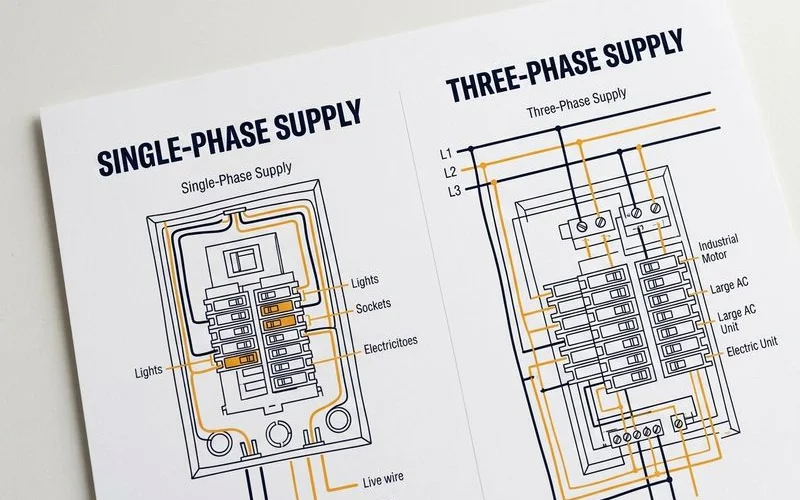
Our technicians find this setup comfortably handles a total load up to 10 kilowatts (kW). This 10kW capacity is plenty for basic lighting, standard appliances, and a couple of air conditioners.
Three-phase power is an entirely different system that delivers 400 volts through four separate wires. We recommend this heavy-duty option when a property requires significantly more capacity. The incoming power gets split evenly across three distinct streams. This division prevents any single electrical phase from becoming overloaded and shutting down.
The Role of the Distribution Board
Our electrical wiring service starts by checking what your property actually needs at the distribution board (DB). The DB box acts as the control centre that protects your home circuits. You will notice a three-phase DB panel looks noticeably wider to accommodate the split wiring.
We know that sticking with a single-phase setup is the most economical choice for standard use. Upgrading only makes financial sense when your daily demand is genuinely high.
An expert evaluation confirms your exact requirements before any work begins.
How They Compare
We put together this side-by-side comparison so you can see where each system fits best. The numbers help clarify which option makes sense for your property. Review these verifiable differences before making a final decision.
| Feature | Single-Phase (230V) | Three-Phase (400V) |
|---|---|---|
| Maximum TNB Capacity | Up to 10kW with 60A limit | Above 10kW supporting 100A |
| Wires from Utility Pole | 2 wires for simple delivery | 4 wires for split power |
| Electricity Tariff Rate | Same base rate per kWh | Same base rate per kWh |
| Home EV Charging Limit | Supports max 7kW charger | Fits fast 11kW or 22kW units |
| DB Box Physical Size | Compact with standard slots | Wider for separated breakers |
| General Upgrade Fees | Lower basic material costs | Higher plus TNB connection fee |
Our table clearly shows that a larger supply does not lower your monthly electricity bill. TNB charges the exact same tariff rate per kilowatt-hour for both residential connections. The upgrade purely provides more raw capacity for heavy electrical demand.
Signs Your Property May Need Three-Phase
We constantly answer the common question: do I need three phase at home? Total load is the most important metric to evaluate. TNB officially advises upgrading when your household electricity demand exceeds 10kW.
Our electricians see single-phase systems struggle with specific heavy appliances. You will likely need an upgrade if you install multiple power-hungry devices. The most common triggers for a capacity overload include:
- three or more large 1.5HP air conditioners
- a dedicated swimming pool pump system
- multiple instant water heaters running concurrently
- commercial-grade kitchen baking equipment
We are processing more upgrade requests lately due to the rise of electric vehicles. A standard single-phase connection maxes out at a 7kW home EV charger. Owners wanting a faster 11kW or 22kW charging station must install a three-phase supply.
Our residential clients also upgrade when mixing home use with light commercial activities. Running machinery in a small workshop demands highly stable power. A larger incoming supply removes the energy bottleneck completely.
We always warn clients not to jump to conclusions based on a single tripped breaker. Many external factors cause a sudden power interruption. Keep this specific rule in mind during your initial troubleshooting.
We advise treating a tripped breaker as a clue, not a final verdict. A main panel shutting down under heavy load might indicate a true capacity shortage. The fault could also stem from poorly balanced circuits or a single defective appliance.
Our team measures your exact ampere draw to find the absolute truth. You should never guess when dealing with electrical system safety. Accurate testing saves money on completely unnecessary panel replacements.
The Upgrade Process and Cost
We manage the entire transition as a carefully planned technical project. The process involves coordinating with TNB and modifying your internal wiring. You must use a licensed electrical contractor registered with the Energy Commission (Suruhanjaya Tenaga) for this work.
Our registered wiremen handle the required paperwork and submit the TNB three phase application to the utility provider. TNB must approve the request and physically run a new four-wire cable to your meter pillar. The utility company charges a standard connection fee based on overhead or underground cable types.
Updating Your Internal Wiring
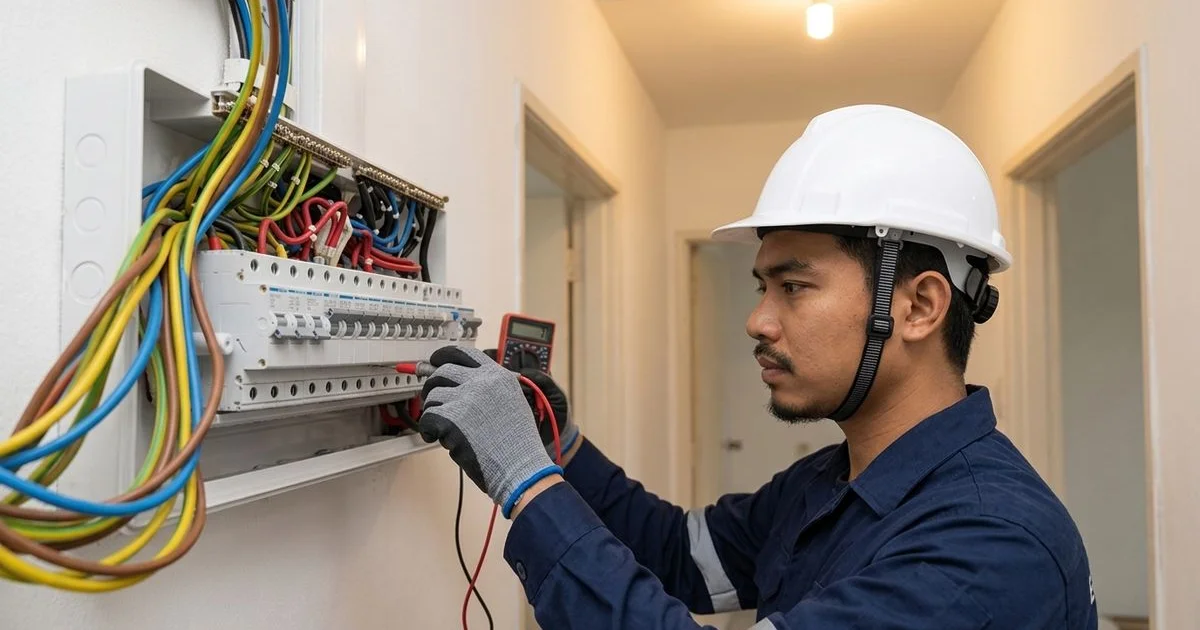
We then perform the three phase power upgrade on your internal components to safely receive the new 400-volt supply. The technician replaces the main incoming cable and installs a wider DB box. Every existing circuit gets carefully re-routed and balanced across the three new phases.
Our rewiring cost guide explains how these internal modifications affect the final price. This dual-step process means the project costs more and takes longer than a standard repair. A thorough initial assessment ensures you only pay for capacity you will actively use.
We advise most typical homeowners that a standard 230-volt connection remains the most sensible option. A reliable contractor will evaluate specific criteria before recommending an upgrade:
- exact current ampere draw during peak hours
- future plans for heavy appliance installations
- existing panel age and wire condition
Upgrading removes performance bottlenecks only if your property has a genuinely high electrical demand.
Our team insists on measuring your real consumption before altering your electrical infrastructure. A proper on-site check provides the accurate data needed to make a smart decision.
Reach out today to schedule a thorough load assessment and secure your power supply.