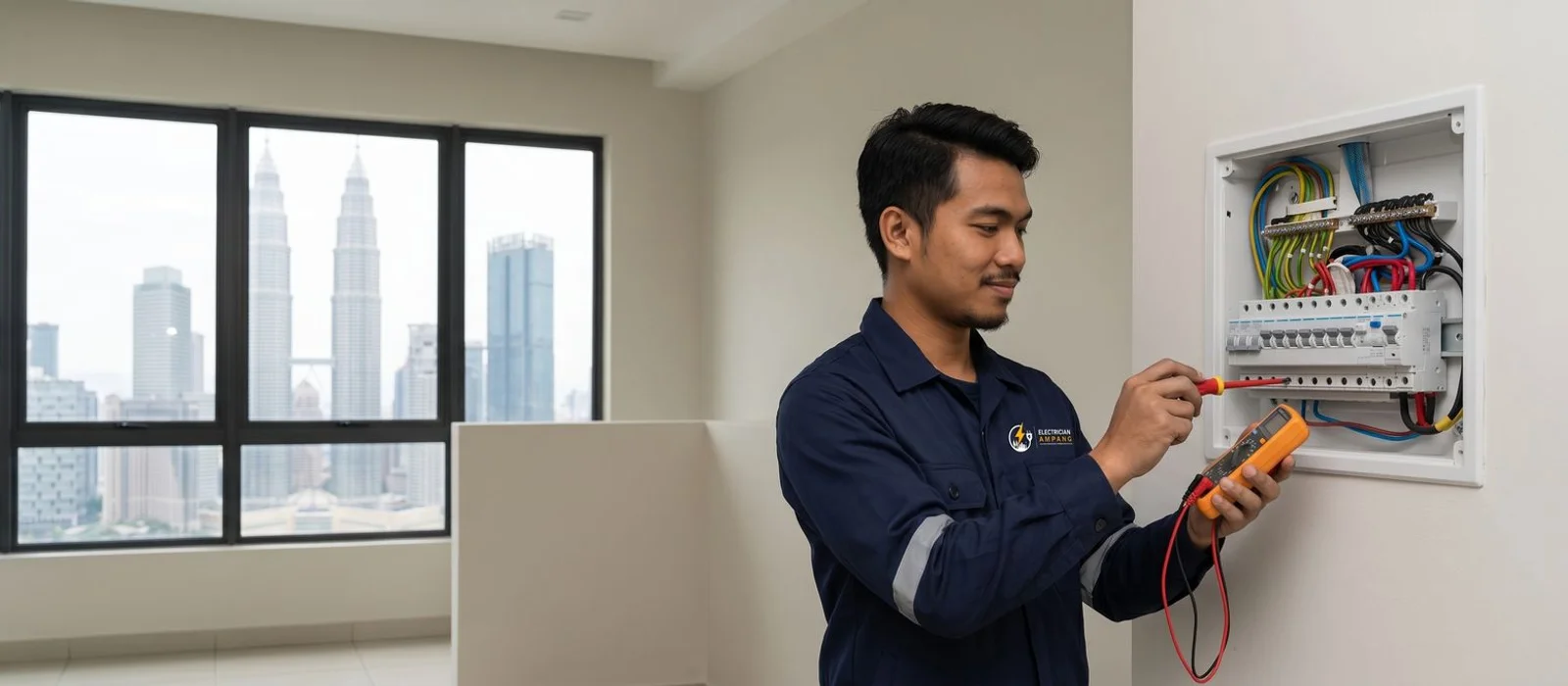
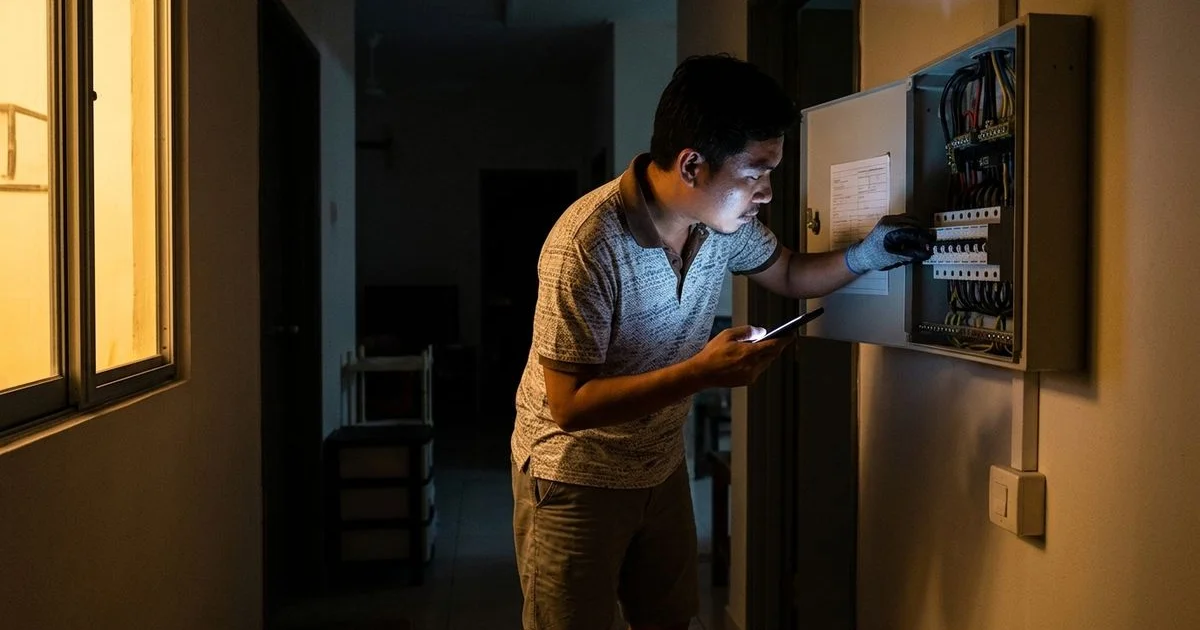
We often see frustrated homeowners asking exactly why does my db box keep tripping during peak hours.
That sudden click in the dark is actually your distribution board doing exactly what it was built to do, as it cuts the power instantly to prevent an electrical fire or a serious shock. Our team responds to these calls daily, giving us a clear view of the most frequent triggers in Malaysian homes.
The data shows that an overloaded circuit, earth leakage, a faulty appliance, or hidden moisture are almost always the real culprits. Let’s look at the science behind these ELCB trip causes and outline a few practical ways you can respond safely.
What a tripping DB box is actually telling you
We find that many people panic when a circuit breaker keeps tripping repeatedly. The switch actually flips off to protect your property from excessive current. Our journey as Electrician Ampang started back in 2011 under New Era Air Cond & Electrical, and since then, we have resolved thousands of these specific faults.
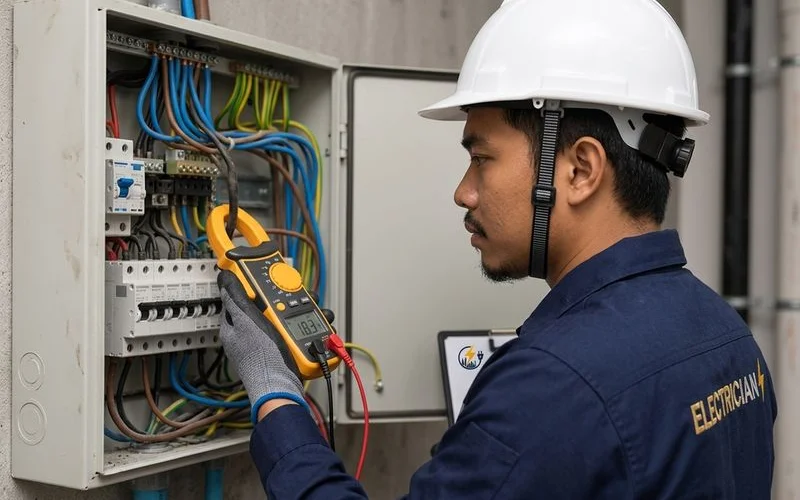
Industry data shows that these outages usually stem from four distinct categories of failure. Identifying the right category is the first step toward a permanent fix.
- Overloaded Circuits: A standard Malaysian water heater pulls between 3.6kW and 4.2kW, which can easily overwhelm a shared 20A circuit when run alongside an air conditioner.
- Earth Leakage: Current escapes the wiring path, often triggering the RCCB to prevent fatal shocks.
- Faulty Appliances: Older washing machines or worn kettles frequently develop internal electrical leaks.
- Hidden Moisture: Condensation or water ingress creates unintended bridges between live wires.
We strictly follow Suruhanjaya Tenaga guidelines, which mandate a 30mA sensitivity for RCCBs in wet areas. This low threshold is designed specifically to prevent fatal electrocution. If you want a hand pinning down the exact cause, our emergency electrical troubleshooting service traces the fault for you.
Why trips happen at night or in wet weather
A lot of homeowners notice their power keeps tripping at home at night, almost on a predictable schedule. There is a simple, scientifically backed reason for this timing.
Humidity naturally rises after dark, allowing dampness to creep into junction boxes and outdoor autogate wiring. That extra moisture makes existing earth leakage much worse, causing the protective switch to trip easily. Our emergency call logs show a massive spike between 7 PM and 10 PM. This evening window is when the water heater, air conditioners, and kitchen appliances all run simultaneously. Combining a heavy electrical load with increased dampness is a guaranteed recipe for a sudden outage.
We also see similar patterns during the heavy monsoon rains common in the Klang Valley. If your power fails only during severe wet weather, that strongly points toward an exposed outdoor circuit. It is a clear warning sign that a weatherproof seal has failed and needs immediate replacement.
A pattern is a clue
If you note down when the trips happen and which appliances were on, you give the electrician a head start. A clear pattern often points straight to the faulty circuit.
Safe checks you can do before calling
There are a few simple, highly effective checks you can perform safely on your own. None of these initial steps require opening panels or touching live wiring.
We recommend starting with a quick visual inspection of the DB box itself. Identifying which switch has dropped tells you a lot about the problem:
- Miniature Circuit Breaker (MCB): If a smaller switch is down, the fault is isolated to a specific circuit or room.
- Main RCCB/ELCB: If the larger switch with the test button trips, it indicates a broader earth leakage issue across the system.
Our standard advice is to unplug all devices on the affected circuit before attempting a reset. Try to flip the tripped switch back up exactly one time. If it holds, plug your appliances back in one by one until the breaker trips again, which reveals your faulty device.
We strongly advise checking nearby 13A socket outlets for warmth, odd burning smells, or brown discolouration. If you notice any of these warning signs, leave that circuit turned off completely. Forcing a stubborn switch repeatedly can melt damaged wiring, so let a certified professional take over if it fails to reset.
When a breaker that won’t reset means a real fault
A switch that refuses to stay on is not simply being stubborn. It is holding firm because a dangerous electrical fault is still active on the line.
We often see homeowners trying to force a breaker closed, which is incredibly dangerous. Forcing it again and again rapidly heats up compromised wiring, turning a minor short circuit into a major fire hazard. The safest action is to leave that specific circuit off and call for an inspection. The root cause could be failed cable insulation, a fried appliance, or an ageing distribution board that can no longer manage the demand.
Our inspections frequently reveal that homes built in the 1990s still rely on outdated components that fail under modern loads. If your board is old, our guide on DB box repair vs replacement explains when a full upgrade makes more financial sense than another temporary patch. A DB box that keeps tripping is absolutely a fixable problem.
| Service Feature | How It Benefits You |
|---|---|
| Transparent Pricing | Flat RM50 checking fee, fully waived upon quotation acceptance. |
| Rapid Response | Same-day dispatch ensures you are not left in the dark. |
We want you to feel confident about the repair process from the very first phone call.
Reach out to our team today to get that stubborn fault permanently resolved.