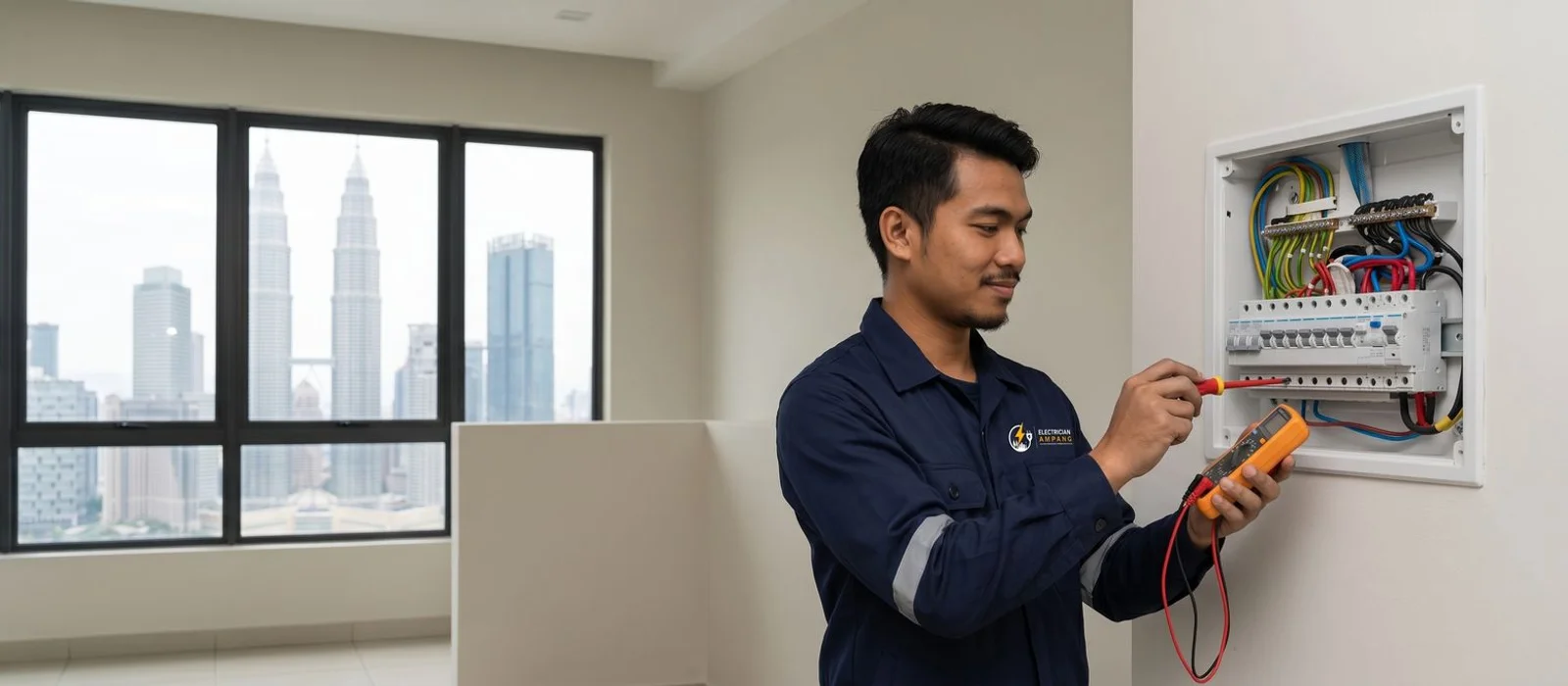
We see DB box confusion daily at Electrican Ampang, where our team has been solving local electrical issues since starting under New Era Air Cond & Electrical in 2011. Homeowners often wonder if a tripping distribution board needs a simple fix or a complete replacement.
The line between a quick patch and a necessary upgrade usually comes down to the age and safety of your current setup.
Our goal here is to share the data, explain what the parts actually do, and outline the exact steps to handle a faulty db box repair vs replacement. A clear understanding of these components helps you make the best decision for your property.
This knowledge prevents you from spending money on temporary fixes that fail a few months later.
When a DB box fault is repairable
We typically recommend a targeted repair if you just have one faulty switch or a loose terminal on a board that meets current Suruhanjaya Tenaga guidelines. A distribution board fault is usually repairable when the issue is isolated to a single modern component and the main enclosure is sound.
A single worn-out Miniature Circuit Breaker (MCB) that buzzes or trips prematurely can be swapped easily. Our technicians find that tightening a loose terminal often stops localized overheating without requiring a full system overhaul. Fixing one faulty part is highly cost-effective, provided the board has proper earth-leakage protection already in place.
An expert inspection checks the board, finds the real fault, and gives you a clear assessment of its remaining lifespan. Our emergency troubleshooting service handles this directly, telling you honestly whether a repair will hold or if the unit is failing.
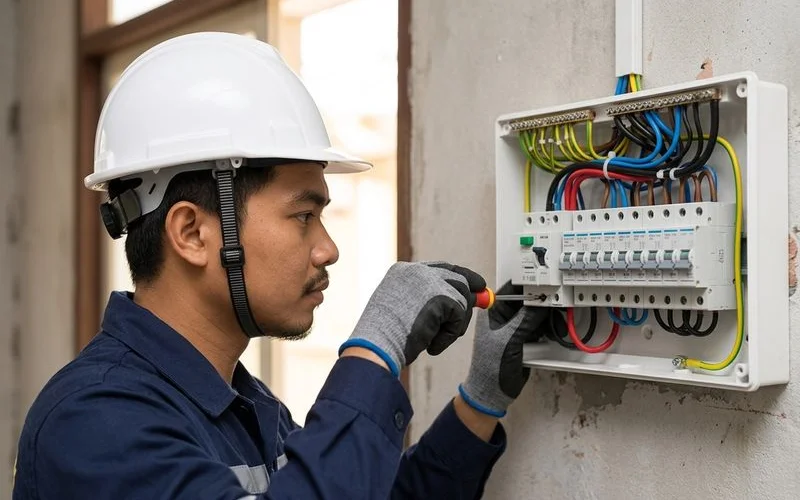
Proper diagnostics remain the foundation of any safe electrical work. This step ensures the underlying wiring is completely safe before any new parts are installed.
When the board is obsolete and needs replacing
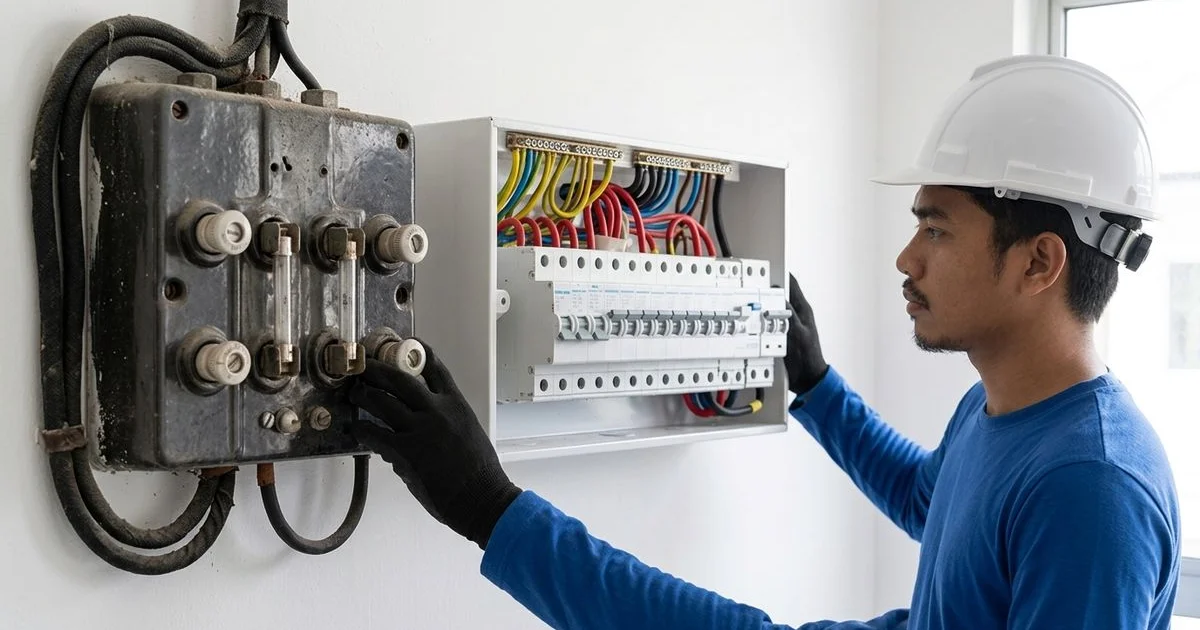
We strongly advise against patching a board that is over 30 years old or repeatedly trips for no clear reason. A distribution board must be replaced when it uses outdated rewireable fuses, lacks earth-leakage protection, or shows visible signs of scorched plastic.
Upgrading to a Metalclad DB enclosure is the standard today, as older PVC boxes are prone to melting and pose a serious fire hazard. Our crews frequently replace units that are completely full, leaving no spare slots for new air conditioners or water heaters.
In Malaysia, the average lifespan of a residential DB box is around 30 to 40 years. Repairing an obsolete board is often a waste of your money, because the next component failure is usually right around the corner, making an old fuse board replacement the only logical step.
Repair the part, not the past
If a fault keeps coming back on an old board, you are not fixing the problem. You are delaying it. A board that cannot be made safe should be replaced, not patched again.
MCB, RCCB and RCBO protection explained
We want to clarify the MCB RCCB RCBO difference, so you can easily understand your home safety setup. Modern distribution boards rely on three distinct protective devices to prevent fires and electric shocks. Each component performs a highly specific job to keep your property secure.
The Role of the MCB
Our installations use reliable brands like Hager or ABB to ensure the breaker trips quickly when too much current flows. An MCB, or miniature circuit breaker, protects your internal wiring from overloads and short circuits. This action stops the wiring from overheating and causing structural fires.
Understanding the RCCB
We consider the RCCB, or residual current circuit breaker, to be the most critical device for human safety. It senses current leaking to earth and cuts the power in a fraction of a second, preventing lethal electric shocks. Local Suruhanjaya Tenaga regulations strictly mandate a 30mA RCCB for general power sockets and a highly sensitive 10mA RCCB for water heater circuits.
The Advantage of an RCBO
We often install RCBOs in modern homes because they handle short circuits and shock protection simultaneously while saving space in the enclosure. An RCBO is a single, advanced device that combines both overload and earth leakage protection. Older fuse setups have none of this technology, relying on crude rewireable fuses that offer zero protection against electrocution.
Repair vs replacement at a glance
We use this simple framework to help clients decide which path makes the most sense for their property. Comparing a targeted fix against a full upgrade comes down to cost, safety, and future capacity. This breakdown highlights the long-term value of updating older electrical panels.
| Factor | Repair | Replacement |
|---|---|---|
| Best for | One isolated fault on a sound, modern board | Old fuse boards, missing RCCB, or scorched PVC enclosures |
| Cost | Lower, covering a single component like a 20A MCB and labour | RM800 to RM2500 on average for a new Metalclad unit, but provides a complete fix |
| Shock protection | Stays exactly as it is, which is only safe if a proper RCCB is present | Full 30mA and 10mA RCCB protection added to meet current TNB standards |
| Room for new circuits | None added | Extra ways installed for future air conditioning, water heaters, and sockets |
| Expected lifespan | Fixes one immediate fault, though others may follow on aging equipment | A modern Hager or ABB board provides reliable safety for 30 to 40 years |
We recommend a repair when the board is less than ten years old and the fault is minor. A complete replacement is the safest choice when the equipment is visibly aging or out of space. An on-site check makes the choice clear and based on physical evidence.
Benefits of upgrading and the cost of a new board
We find that a modern panel makes it much easier to extend your home wiring safely later on. If you decide to upgrade distribution board hardware, the new setup adds full earth-leakage protection, clears out hidden wear, and creates space for future heavy appliances.
This ties directly into wider property improvements, such as the projects covered by our electrical wiring and rewiring service.
Our pricing for a new board depends entirely on the size of the unit, the number of active circuits, and whether you have a single-phase or three-phase supply. Standard single-phase upgrades generally run between RM800 and RM1500, while larger three-phase systems can cost up to RM2500.
A qualified electrician must check the system on-site to provide a transparent, written quotation based on actual cable conditions.
We waive our flat RM50 inspection fee completely once you accept the final quotation. You receive an honest recommendation based on local safety codes, with zero pressure and absolutely no hidden costs.
Contact our team today to schedule your assessment and ensure your home remains safe for decades to come.