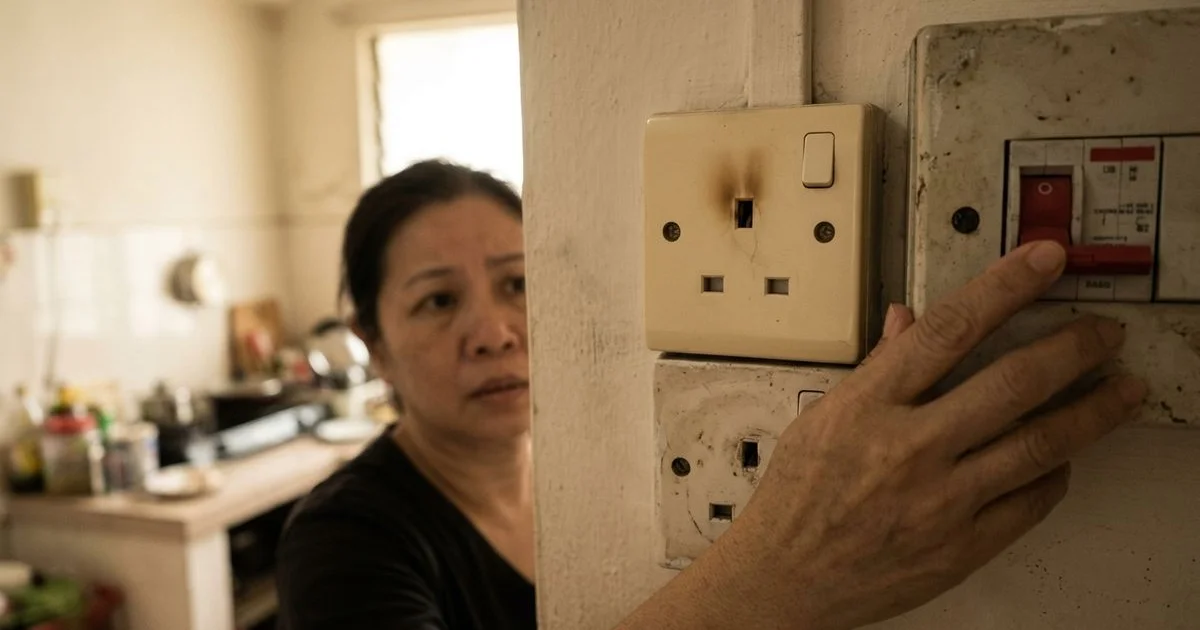
You know how a sudden, sharp scent of melting plastic immediately sets off alarm bells in your head. A burning smell from a socket is one of the most urgent warning signs your electrical system can give you.
We started Electrician Ampang back in 2011 to handle exactly these kinds of high-stakes domestic emergencies. Catching this early is the real difference between a simple component swap and a dangerous fire hazard.
Let’s look at the data behind these faults and outline the exact steps you need to take to secure your property right now.
Why a burning smell signals overheating
That alarming scent of melting plastic near your DB box or wall plug means heat is actively destroying your electrical insulation. The core issue is almost always a loose connection, an overloaded circuit, or electrical arcing across a gap.
Malaysian Standard (MS 2112) specifies that the PVC insulation inside standard house wiring is rated to handle up to 70°C safely. The plastic compound physically begins to break down and melt when temperatures exceed this limit.
Our technicians frequently trace this extreme heat back to basic 13A sockets that are pushed past their 3,000-watt safe limit. High-draw appliances like air fryers or water heaters running simultaneously will quickly overwhelm a single power point.
Here are the visual and physical clues that confirm a socket is actively overheating:
- Discolouration: Brown or yellow scorch marks appearing on the white plastic faceplate.
- Heat Radiation: The switch or plug feels noticeably warm to the touch.
- Audible Warnings: A faint buzzing or crackling sound accompanying the odour.
- Physical Distortion: The plug feels stuck or the socket plastic looks slightly warped.
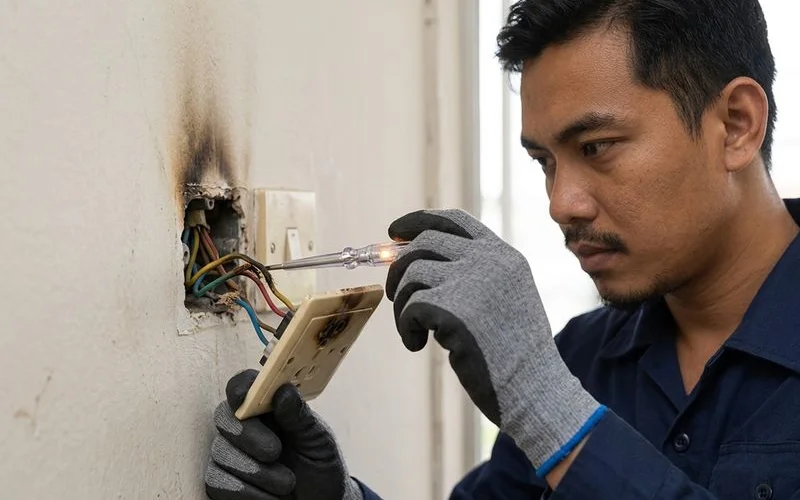
Any of these signs alongside a foul odour means the fault is active and escalating. This is exactly the kind of critical problem our emergency electrical troubleshooting service is built to isolate and resolve quickly.
We use thermal imaging scanners to pinpoint the exact source of the heat before opening the wall. Finding the exact failing component early prevents further damage to the surrounding wiring.
Immediate steps: cut power, unplug, do not touch
If your socket smells like burning, you must immediately isolate the circuit at your distribution board to stop the flow of electricity. Do not touch the affected plug or switch under any circumstances.
Acting calmly and systematically will prevent property damage and physical injury. Here is the exact sequence to secure an overheating power point:
- Isolate the breaker: Go directly to your DB box and switch off the specific Miniature Circuit Breaker (MCB) for that room.
- Cut the main power: Switch off the main isolator switch if the smell is originating from the DB box itself.
- Unplug safely: Disconnect appliances only after you confirm the power is completely dead.
- Secure the area: Leave the plug exactly where it is if the plastic has already melted onto the socket pins.
Off is safe, on is not
The single most important thing you can do is cut the power to that circuit. With the power off, the fault cannot get hotter while you wait for an electrician.
A damaged socket remains highly unstable and should never be used again.
| Safe Actions | Dangerous Actions |
|---|---|
| Flipping the main DB breaker | Touching a warm faceplate |
| Isolating the room’s MCB | Yanking a stuck or melted plug |
| Taking a photo for the technician | Poking the socket with a screwdriver |
We strongly advise against pulling on a stuck cable, as this can expose live wires. Taking a photograph of the damage from a safe distance is a much better way to help your electrician prepare for the repair.
The real fire risk and how fast it can escalate
A burning smell from your DB box or socket is a severe fire risk that can ignite surrounding materials in a matter of hours. Electrical arcing produces intense heat that easily catches dust, insulation, and drywall on fire.
Suruhanjaya Tenaga (the Energy Commission) reports that electrical faults are responsible for approximately 60% of all fires in Malaysian buildings. This statistic highlights just how quickly a seemingly small wiring issue can turn into a structural disaster.
Once PVC insulation melts away, exposed copper wires can arc across the gap. This arcing generates temperatures high enough to ignite any nearby combustible material.
The Heat Escalation Timeline A minor loose connection creates electrical resistance, which rapidly generates heat. This heat melts the 70°C-rated PVC, exposing raw copper and allowing electrical arcs to ignite nearby dust instantly.
A burning smell sits among the most serious of the common electrical hazards found in homes.
We share these facts to emphasize the urgency of the situation, not to cause panic. You must treat the odour as an immediate alarm and cut the power without delay.
The reassuring part is that the immediate danger drops sharply the second you flip that breaker. Your next priority is getting a licensed professional to inspect the hidden damage inside the wall.
Why this needs same-day professional attention
An active electrical burning smell requires a licensed professional on the same day to prevent a catastrophic fire. Delaying the inspection allows compromised wires to deteriorate further behind your walls.
The root cause of the heat must be identified through proper diagnostic testing. It could be a loose terminal, a degraded 13A socket, damaged internal wiring, or a failing breaker switch. If the heat is coming from the DB box itself, our guide on DB box repair vs replacement explains when an upgrade is the safer call.
Guessing the cause or attempting a DIY fix is highly illegal and incredibly dangerous. The Malaysian Electricity Supply Act 1990 clearly dictates that only certified personnel are allowed to conduct electrical repairs. Unlicensed modifications can lead to hefty fines and will void your home insurance policy in the event of a fire.
Our diagnostic process involves specialized tools to guarantee your safety:
- Circuit Continuity Testing: Verifying the integrity of the hidden copper wires.
- Thermal Imaging: Spotting invisible hot spots inside your DB box before they ignite.
- Load Balancing Checks: Ensuring your high-draw appliances are not overloading a single circuit.
If you smell melting plastic, switch off the circuit and call us immediately.
We offer same-day dispatch for urgent faults precisely like this across the region. The on-site checking fee is a flat RM50, and it is fully waived once you accept the repair quotation.
This transparent pricing means you can secure expert help fast without worrying about hidden upfront costs. Call our emergency hotline today if you notice a burning smell from a socket to get your electrical system safely inspected and repaired.