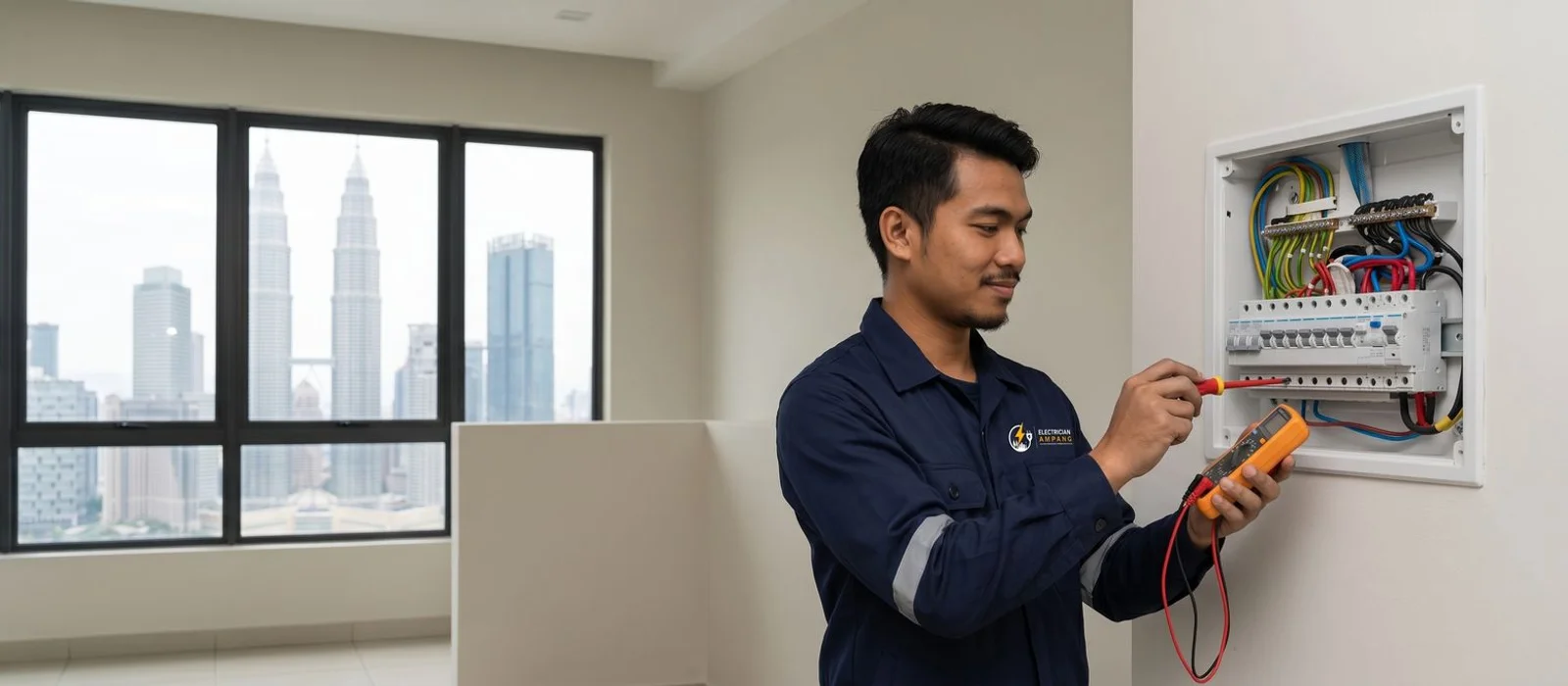
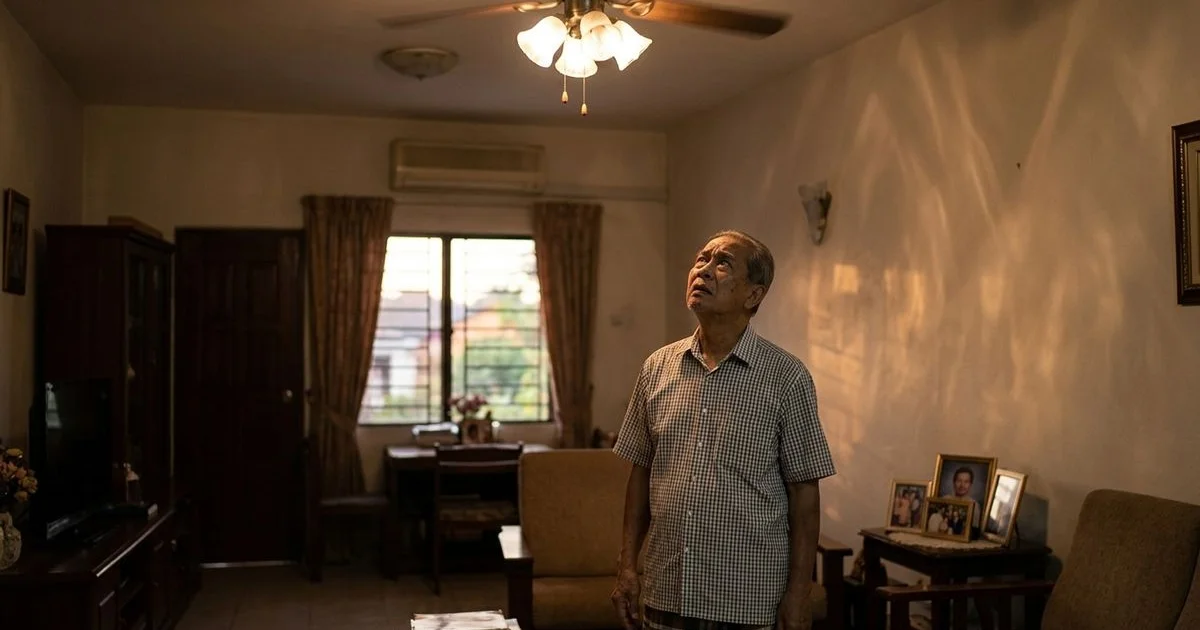
Our team knows the frustration of a lighting fixture that refuses to stay steady.
Identifying the primary flickering lights causes is an essential safety step for any property owner. Electrician Ampang started in 2011 as a dedicated group of professionals operating under New Era Air Cond & Electrical.
We see these specific electrical warning signs daily across local properties.
From what the data shows, a flicker is rarely just a bad bulb; it is usually your home signaling an unstable power supply. Let’s look at the actual faults, what the symptoms are telling you, and explore practical ways to respond safely.
What makes lights flicker
A flickering light happens when the electrical current reaching the bulb is interrupted or unstable. If you often ask ‘why do my lights flicker’, know that this is a clear warning sign of varying voltage or poor connections.
Our emergency troubleshooting service is built to track down exactly which component is behind your flicker. There are four common faults you should check first.
Suruhanjaya Tenaga regulations state that standard voltage drops should not exceed 5% on a typical 240V supply. We frequently see issues arise from these core areas:
- Loose Wiring: A loose connection at the light fitting, the switch, or a junction breaks contact for a split second. This creates the visual flash you see.
- Failing Fixtures: The holder, a common E27 screw bulb, or an internal LED driver simply wears out over time.
- Overloaded Circuits: Too much demand on a single circuit causes the voltage to sag noticeably.
- Grid Voltage Drops: Sometimes the main supply from Tenaga Nasional Berhad (TNB) fluctuates, or a fault exists on your main incoming cable.
Single-light flicker versus whole-house flicker
A single-light flicker points to a local fixture fault, while whole-house flickering indicates a serious issue at your main distribution board. This one observation narrows things down fast.
Count the lights first
Before you call, note whether one light flickers or many. That single detail often tells an electrician whether they are chasing a fitting fault or a wiring fault.
Our lighting installation and repair service handles local fixture upgrades cleanly and safely. If only one light acts up, the problem is almost always local to that specific fitting. It could be a tired holder, a failing LED driver, or a worn switch causing the disruption.
We always ask homeowners to perform a quick visual count before touching the panel. If lights flicker across several rooms, the cause is shared across the entire system.
That pattern points directly to the circuit breaker, the main Distribution Board (DB) box, or the incoming supply. Our technicians treat whole-house flickering as a serious fault requiring prompt professional testing.
| Scope of Flicker | Likely Cause | Typical Component at Fault | Action Required |
|---|---|---|---|
| Single Bulb | Localized fault | E27/B22 bulb, LED driver, local switch | Replace bulb or switch |
| One Room | Circuit issue | 10A lighting MCB, loose junction wiring | Check specific MCB |
| Whole House | Main supply fault | Main incoming cable, TNB grid, Main Switch | Urgent professional check |
Many local DB boxes use common Miniature Circuit Breakers (MCB) rated for specific loads. Understanding this scope speeds up the repair process significantly.
Which causes are urgent and which are minor
Urgent causes involve overheating wires or burning smells, while minor issues usually stem from a loose bulb or a dying internal component. Not every electrical fluctuation is an immediate emergency.
Our team categorises these faults to help you understand the current risk level.
Minor Lighting Faults
Minor causes include an old bulb, a bulb that is the wrong type for a dimmer, and a single LED fitting reaching the end of its lifespan. These events are inconvenient but generally not dangerous.
We recommend swapping a standard bulb yourself to see if the system settles. Many modern LED lamps contain tiny drivers that become highly sensitive to slight voltage changes as they age.
Urgent Electrical Hazards
Urgent causes include loose wiring at a connection or a circuit that is heavily overloaded. We take any visual flash accompanied by warmth, buzzing, or a burning plastic smell very seriously.
Those specific signs mean heat is building rapidly behind your walls or near the fitting. Heat damages the insulation on standard residential cables and creates a severe fire risk.
Our safety protocol treats sudden whole-house flickering as a high-priority emergency. When in doubt, leave the switch off and schedule a professional inspection immediately. An overloaded Residual Current Circuit Breaker (RCCB) that trips repeatedly is another clear warning to stop using that circuit. If a breaker will not stay on, our guide on why your DB box keeps tripping explains what to check next.
Simple checks and when to call an electrician
You can safely test a flicker by swapping the bulb and checking for loose physical connections before calling a professional. There are a few safe steps you can try right now.
We advise homeowners to observe if the lights dim when appliance turns on, like a heavy air conditioning unit. This specific timing hints at a heavy load pulling too much current from the panel.
Safe DIY Testing Steps
- Swap the E27 or B22 bulb for a known working one.
- Check that the bulb is seated and screwed in firmly.
- Observe if the flicker syncs with large appliances turning on.
Inspect the fixture visually to rule out a simple physical disconnect. Our electricians see many cases where simply replacing a cheap bulb fixes a single light entirely.
If the new bulb solves the problem, your work is done. If the instability continues, spreads to other rooms, or comes with heat, buzzing, or a burning smell, stop testing immediately.
When to Call a Professional
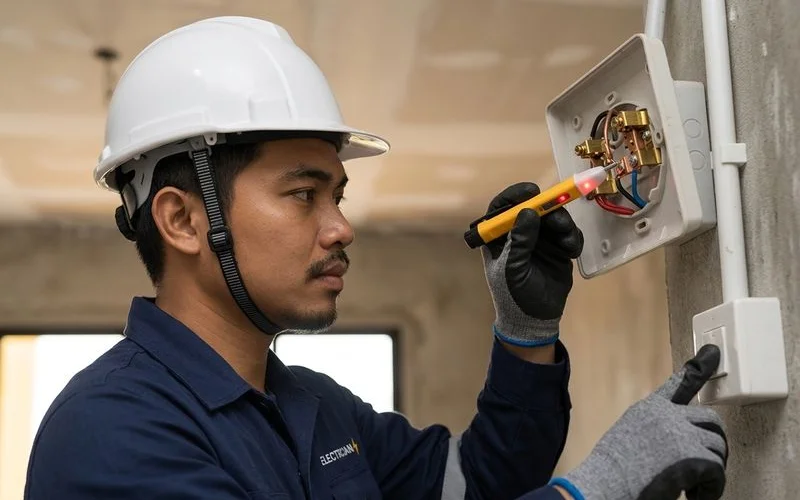
We urge you to contact a licensed contractor and never open the fitting or the switch yourself. Professional flickering lights repair is a highly manageable and fixable fault.
Catching these warning signs early keeps the repair job small and totally safe. We charge a flat RM50 on-site checking fee for residential visits.
This checking fee is fully waived when you accept the quotation. Same-day dispatch is available when the fault looks urgent or dangerous.
Our main goal is to secure your electrical system quickly and affordably. Reach out today to schedule an inspection and stop the flickering for good.