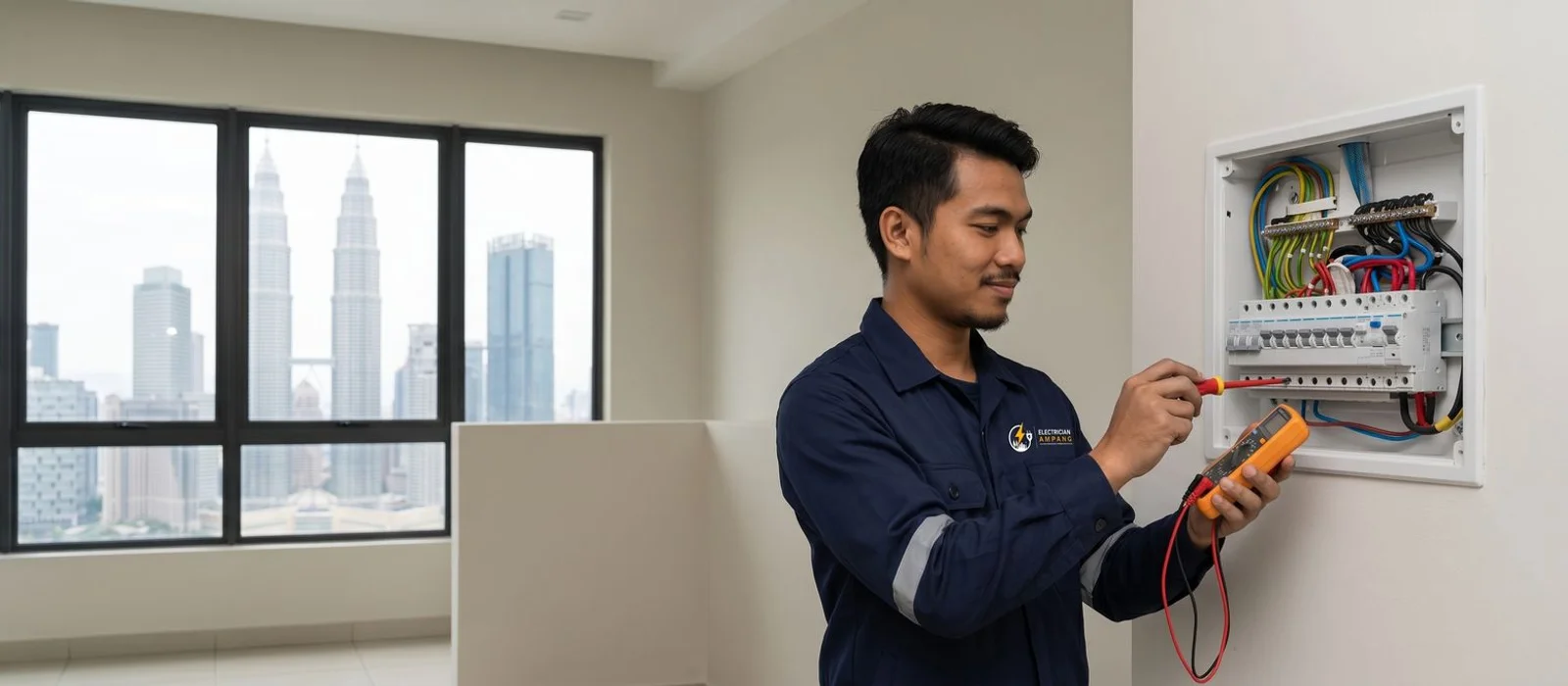
Our team at Electrician Ampang has handled these panic calls since 2011.
When the power suddenly cuts out, the first step is figuring out the source. When facing a sudden power failure what to do first is always the biggest question.
We recommend checking the street outside as your very first diagnostic test. This guide will break down the clear differences between a grid outage and a local fault. Let’s look at the data, what it is actually telling us, and explore a few practical ways to respond.
Is it a TNB outage or a fault in your home?
Identifying Grid vs Local Issues
Our direct answer is that a dark street means a grid issue, while a dark house among lit neighbours means a local fault. Homeowners often ask if it is a TNB outage or my fault when the lights go out. The fix is very different for each scenario.
We know a completely dark street with inactive streetlights almost always points to a broader grid issue. If the whole street is dark, it is a TNB outage and there is nothing wrong with your wiring. You can verify the outage status quickly by checking the myTNB app or calling the TNB Careline at 15454.
Resolving Localized Faults
Our experience shows that TNB usually resolves these weather-related faults within a few hours. The power will naturally return when TNB restores the supply.
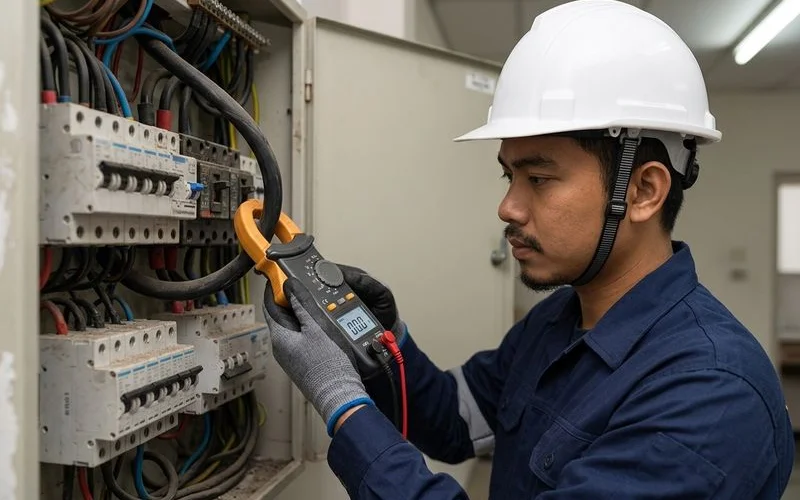
Having no power at home while your neighbours are fully lit means the fault is strictly on your side. Our emergency troubleshooting service comes in to find and fix the cause safely if your house is the only one without power. Ignoring a localized electrical fault can lead to much bigger safety hazards down the line. Taking immediate action protects your expensive home appliances from voltage surges.
Checking the main switch and DB box safely
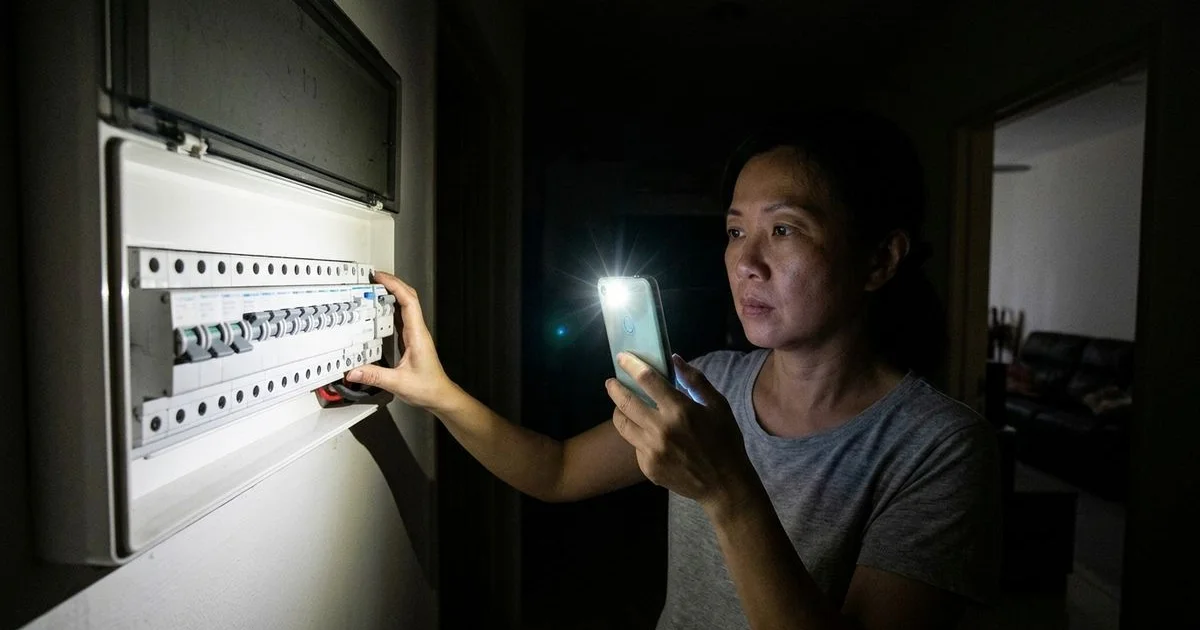
We always tell clients to treat their distribution board with extreme caution. If the outage looks like it is only your home, the next stop is the DB box. This panel of switches feeds power to each specific part of the house.
Our technicians often find that a tripped main switch is doing its job to prevent severe electric shocks. Look at the main Residual Current Circuit Breaker (RCCB) or Earth Leakage Circuit Breaker (ELCB) first. If it has flipped to the off position, the whole house has lost power from there.
We then advise homeowners to scan the smaller Miniature Circuit Breaker (MCB) switches to see if any single one has tripped. A single tripped MCB means one specific circuit has a live fault. You can try resetting a tripped switch exactly one time.
Safe Reset Procedures
We see many people make the dangerous mistake of repeatedly forcing a switch back on. If it trips straight back, leave it off because that circuit requires professional attention. Understanding the different components inside the panel helps you diagnose the problem faster.
Understanding Your DB Box Switches
Our reference for electrical safety relies on the strict guidelines set by Suruhanjaya Tenaga (Energy Commission) in Malaysia. Here is a quick guide to what each common switch does.
| Switch Type | Common Sensitivity | Primary Protection Area |
|---|---|---|
| MCB (Miniature Circuit Breaker) | 6A to 32A | Individual circuits against overload |
| RCCB (Lighting & AC) | 100mA (0.1A) | Whole house lighting and air conditioning units |
| RCCB (Power Sockets) | 30mA (0.03A) | Standard 13A wall sockets |
| RCCB (Wet Areas) | 10mA (0.01A) | Water heaters and outdoor sockets |
We strongly advise memorizing these basic functions for your own safety.
Reset once, then stop
We always tell clients to reset a tripped switch a single time and then stop. If it will not stay on, do not keep forcing it. A switch that trips again is actively protecting you from a real live fault.
We frequently replace 10mA switches when water seepage occurs in older bathrooms. A 10mA switch tripping usually points directly to a faulty water heater. Keep this inspection completely safe by using a battery-powered torch instead of an open flame candle.
Our safety protocol strictly prohibits touching any internal bare wiring. You are only looking at switch positions and nothing more. Opening the main panel cover is a job reserved exclusively for licensed professionals.
Whole-house versus partial power loss
We categorize faults by their scale to narrow down the potential causes quickly. How much of your home has lost power is a strong clue to the root issue. It is definitely worth checking the property room by room.
We consider whole-house failures urgent because they often indicate a major supply connection issue. If the whole house is dark and the main switch has tripped, the fault is extensive. It could be a serious earth leakage fault or a burnt main switch.
Our strict policy is that you should never attempt to bypass a main switch failure. Experiencing a partial power loss in house means only specific rooms or appliance groups are affected. The main switch remains on while a single MCB has tripped.
Common Culprits for Partial Outages
Our daily repair logs show that heavy kitchen appliances are the most common overload causes in Malaysia. Running a microwave and a high-wattage air fryer on the same circuit will frequently trip the 32A breaker. To narrow down the source of a partial power loss, check these common problem areas.
- Heavy Kitchen Appliances: Simultaneous use of ovens, kettles, and induction cookers on a shared circuit.
- Aging Air Conditioners: Compressors drawing too much current as they begin to fail.
- Water Heaters: Internal leaks causing earth faults at the sensitive 10mA RCCB.
- Outdoor Lighting: Rainwater seeping into poorly sealed garden light fixtures.
- Damaged Extension Leads: Cheap, overloaded power strips causing localized short circuits.
We know this localized loss is more contained, but it still needs proper tracing. Repeated tripping on one circuit often has a very specific cause. Identifying the exact faulty appliance saves valuable diagnostic time.
Our team highly recommends reading the full guide on why your DB box trips for detailed explanations. The guide covers the most frequent appliance failures we encounter in the field. Taking proactive steps can prevent these issues from recurring.
Simple checks and when to call an emergency electrician
We advise starting your DIY checks by looking outside to rule out a TNB outage. You should then check the main switch and the MCBs at the DB box.
Try resetting a tripped switch only once and carefully note the extent of the power loss.
When to Stop DIY and Call for Help
Our primary rule is that none of these basic steps involve touching bare wiring. You must call a licensed professional if a switch will not stay reset or if the main switch keeps tripping.
A distinct burning plastic or ozone smell indicates dangerous electrical arcing inside the panel.
- Switches that immediately trip again after a single reset attempt.
- Sparks or popping sounds coming from the distribution board.
- A strong smell of burning plastic or ozone near electrical outlets.
- Water dripping near switches, sockets, or lighting fixtures.
We also warn clients to look out for visible scorch marks or excessive heat radiating from the DB box cover. You should call for help if your house is the only one dark and you cannot locate a tripped switch.
The Energy Commission (Suruhanjaya Tenaga) strictly advises against unlicensed electrical repairs.
Our company offers same-day dispatch for urgent faults so you are not left in the dark for long. A sudden power failure is unsettling, but most causes are clear once they are traced properly.
When wondering about a sudden power failure what to do, calling an expert is always the safest bet.
Our initial on-site check is a flat RM50, fully waived when you accept the quotation. This transparent pricing ensures you know the total cost before any work begins.
Reach out to a certified professional immediately to restore your home’s power safely and efficiently.